

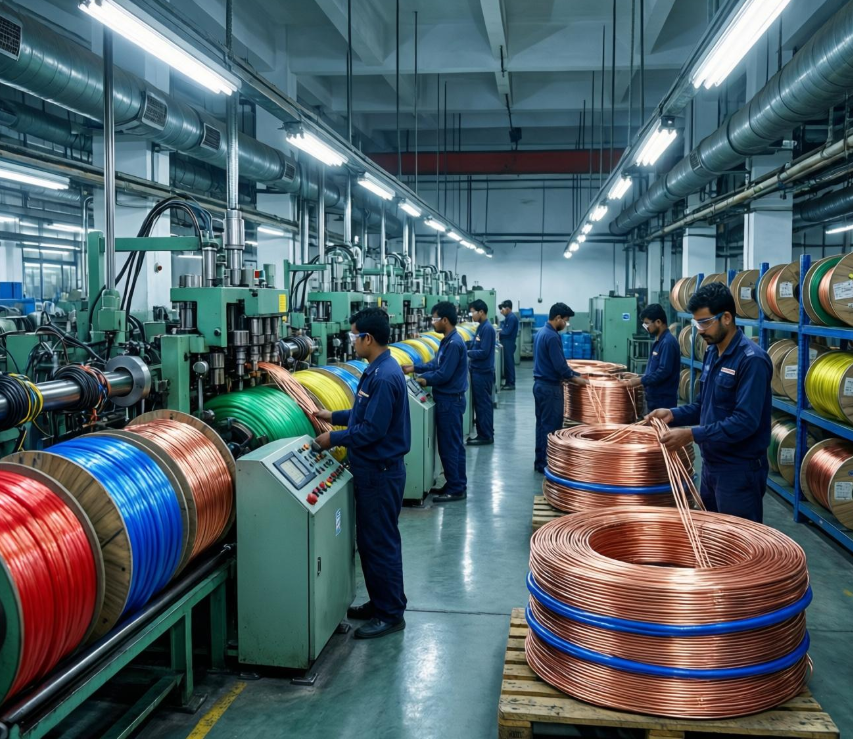

AkijBashir Group has entered Bangladesh’s cable market with a planned Tk300 crore investment and a new three-layer insulated electrical wire that aims to raise safety and quality in homes and buildings. Using an acquired, near-complete factory from Eminence Electric Wire & Cables, the group began production quickly instead of building from scratch, giving it a faster start and room to spend on brand and service. The initial factory will make about 300 tonnes of copper cable and 200 tonnes of PVC products a year, and the company plans to use its nationwide network of showrooms to reach electricians, contractors and retail buyers while aiming to expand capacity if demand grows. This move is timed as Bangladesh keeps building roads, power lines and internet links, and experts say more safe and certified cable options are needed because many small, low-cost makers still sell substandard products that can cause fires and waste. The current cable market is extensive and expanding, valued at approximately Tk12,000 crore, and comprises reputable companies that adhere to safety standards, exclusive imports for extremely high voltage, along with a minor unregulated sector that offers inexpensive, recycled copper wires. AkijBashir hopes to stand out by selling certified three-layer cables with pure copper cores and heat resistance up to 105 degrees Celsius, a step up from common two-layer wires and a product that can help builders and homeowners choose safer fittings. Beyond home wiring, big projects such as new power plants, underground networks and rural grid upgrades mean steady demand for many cable types while the telecoms push for more fiber and plans for 5G add new business for optical fiber makers. Local manufacturers already serve most of the country, and recent investments show a shift from simple volume production to better technology like fire-retardant and high voltage cables and more optical fiber production for internet needs. At the same time, makers face higher copper prices, exchange rate shifts and the need for better testing, and some older firms have struggled when public contracts slowed. Practical steps that could help the whole sector include clearer quality testing, fair purchase rules for public projects, and training for installers so safer cables reach homes and businesses. Buyers, builders and utilities can also help by choosing certified products, and makers can use shared labs and phased upgrades to keep jobs while they improve quality. AkijBashir’s entry shows that bigger players see room for safer, higher value cables in Bangladesh, and if the company scales carefully and works with regulators and builders, the move could push the market toward better safety, more local value and steady work for factories and installers across the country. Customers hope this change brings safer homes and fairer long-term prices.