

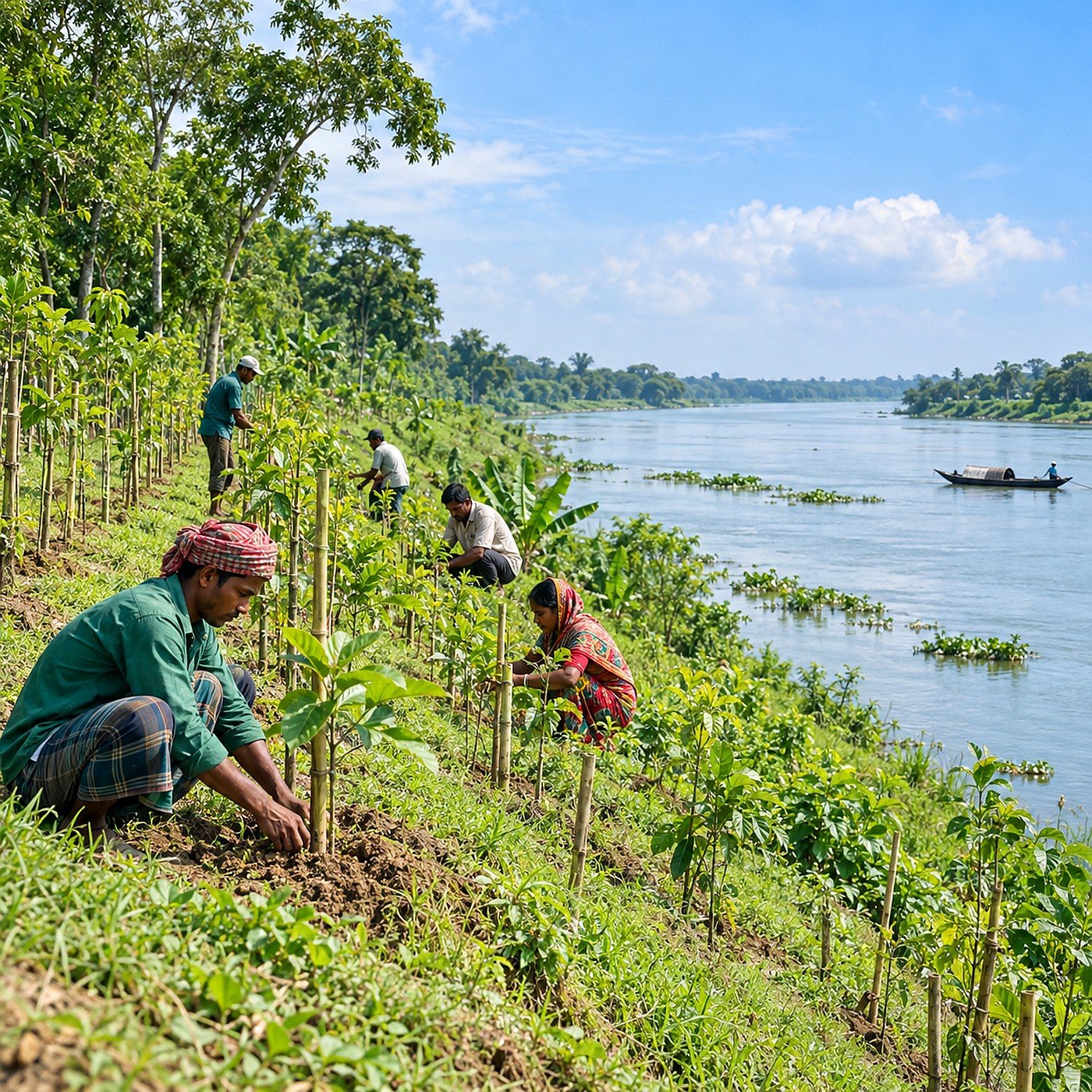

More than 50,000 saplings have been planted along both banks of the Bishkhali River in Morelganj and Kachua upazilas of Bagerhat, turning a recently dredged river corridor into a large-scale social-forestry zone. The plantation stretches for roughly 50 kilometres and covers both government and privately owned land, with young trees placed at regular intervals along the banks. Forest Department field personnel have been monitoring the saplings to support healthy growth, and many of the trees have already developed fresh foliage during the monsoon. The initiative is a useful example of how river management and forestry can be connected. Dredging improves water flow and navigation, while planting along exposed riverbanks can help stabilise soil, increase vegetation cover and reduce erosion pressure over time. Trees can also create shade, habitat and a greener landscape for communities living near the river. Because the project includes private landowners as well as public areas, it can create a stronger sense of local participation in long-term maintenance. Social forestry works best when communities have a reason to protect trees after planting, not simply during the launch of a programme. Riverbank plantations can provide environmental benefits while also creating future economic value from selected species, depending on the management model and benefit-sharing arrangements. Bagerhat is part of a climate-sensitive coastal region where river erosion, salinity and extreme weather affect communities and ecosystems. Expanding tree cover in these areas can therefore support local resilience as well as biodiversity. The scale of the Bishkhali effort is also important. Planting tens of thousands of saplings in a continuous corridor can create a more meaningful ecological impact than isolated small plots if survival rates remain high. The main challenge now is care. Newly planted trees need protection from grazing, storms, waterlogging and human damage, while regular monitoring is needed to replace losses. Success should be measured by how many trees survive and mature, not only by how many were planted. If the plantation is maintained properly, the Bishkhali riverbank can become a visible model for combining dredging, bank protection and afforestation. Similar approaches could be considered in other riverine areas where Bangladesh needs both stronger waterways and more green cover, creating environmental improvements that communities can see and benefit from directly.