

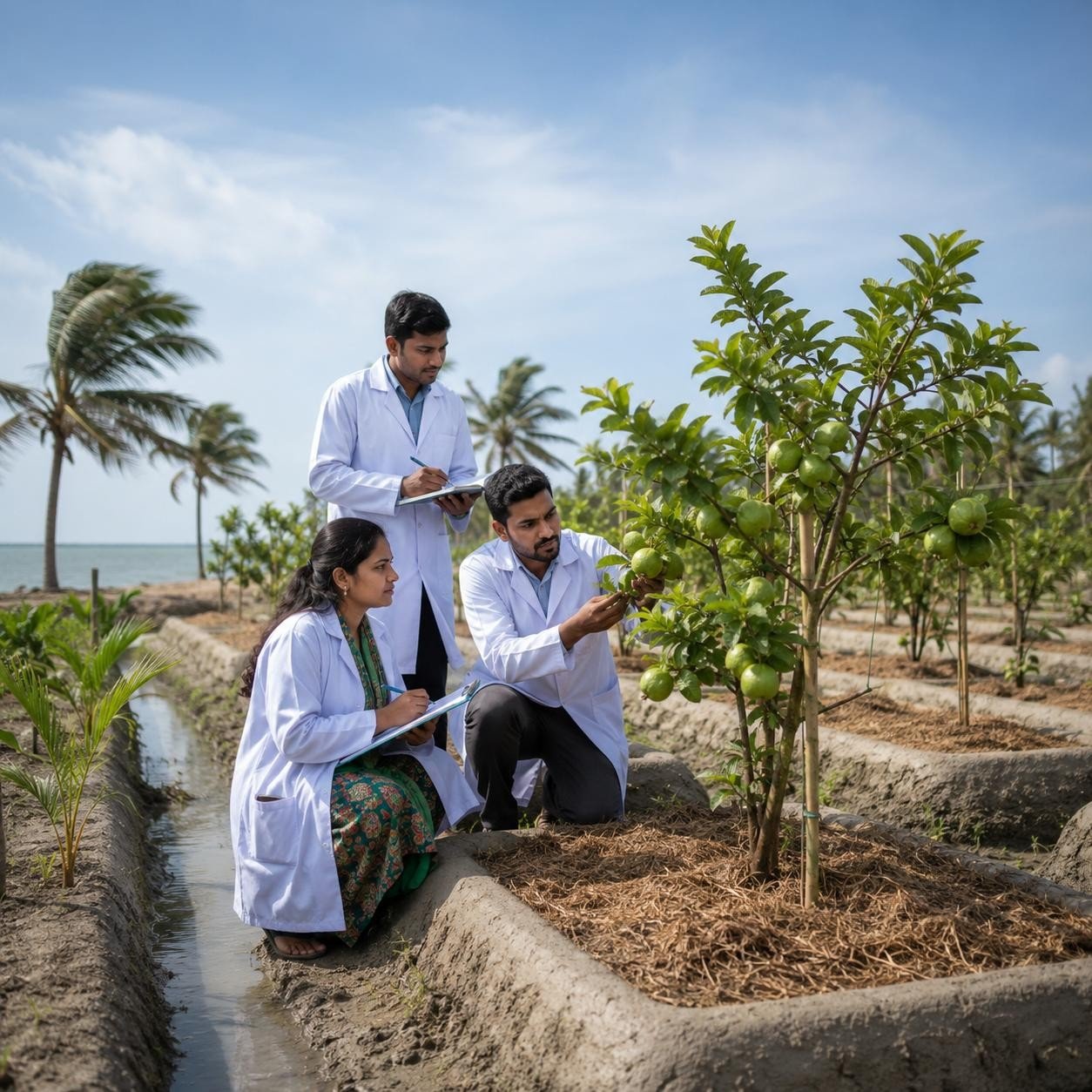

New research on coastal fruit cultivation is creating hope for farmers who face salty soil, strong winds, waterlogging, and changing weather conditions. Scientists from the Bangladesh Agricultural Research Institute are identifying fruit varieties and farming methods that may perform better in the country’s coastal environment. This work could help families use land more productively while adding new sources of food and income. Coastal farming is challenging because crops must survive conditions that are very different from those in central or northern areas. Salt can reduce plant growth, storms can damage young trees, and poor drainage can weaken roots. Farmers therefore need crops and techniques that are tested for these exact problems. Research can show which varieties are more tolerant and what type of planting, irrigation, soil improvement, and protection works best. Fruit cultivation can be especially valuable because healthy trees may produce for several years and create a steady supply for local markets. Orchards can also provide work for nursery owners, farm labourers, traders, transport workers, and small food businesses. However, farmers need clear guidance before investing because fruit trees require time, care, and suitable planting materials. Field trials can reduce this risk by showing real results under coastal conditions. Researchers may compare varieties, measure yield and fruit quality, study disease resistance, and observe how plants respond to salt and extreme weather. They can also test raised beds, drainage channels, mulching, wind protection, and careful water use. Sharing these findings in simple language will be important. Demonstration farms and training sessions can help growers see the methods directly and decide whether they fit their land. Better links with nurseries can ensure that farmers receive healthy and correctly identified plants. Market access will also matter as production grows. Farmers may earn more when fruit is graded, packed, transported safely, and sold through reliable buyers. Processing options such as juice, pickles, dried fruit, and preserves could reduce waste and create local businesses. The research offers more than a new list of crops. It provides a practical way to adapt agriculture to a difficult environment. By combining suitable varieties with better farm management, coastal communities can improve nutrition, strengthen household income, and make better use of available land. Continued testing and farmer participation will help ensure that the recommendations are realistic. With patient support, coastal fruit cultivation could become an important part of a stronger and more climate-ready farming system. Women and young farmers may gain new roles in nurseries, orchard care, packaging, processing, and direct sales. Local schools and community groups could use demonstration gardens to learn about climate-smart agriculture. If coastal fruit earns a trusted name for quality, tourism businesses and urban retailers may become valuable buyers, widening markets for growers.