

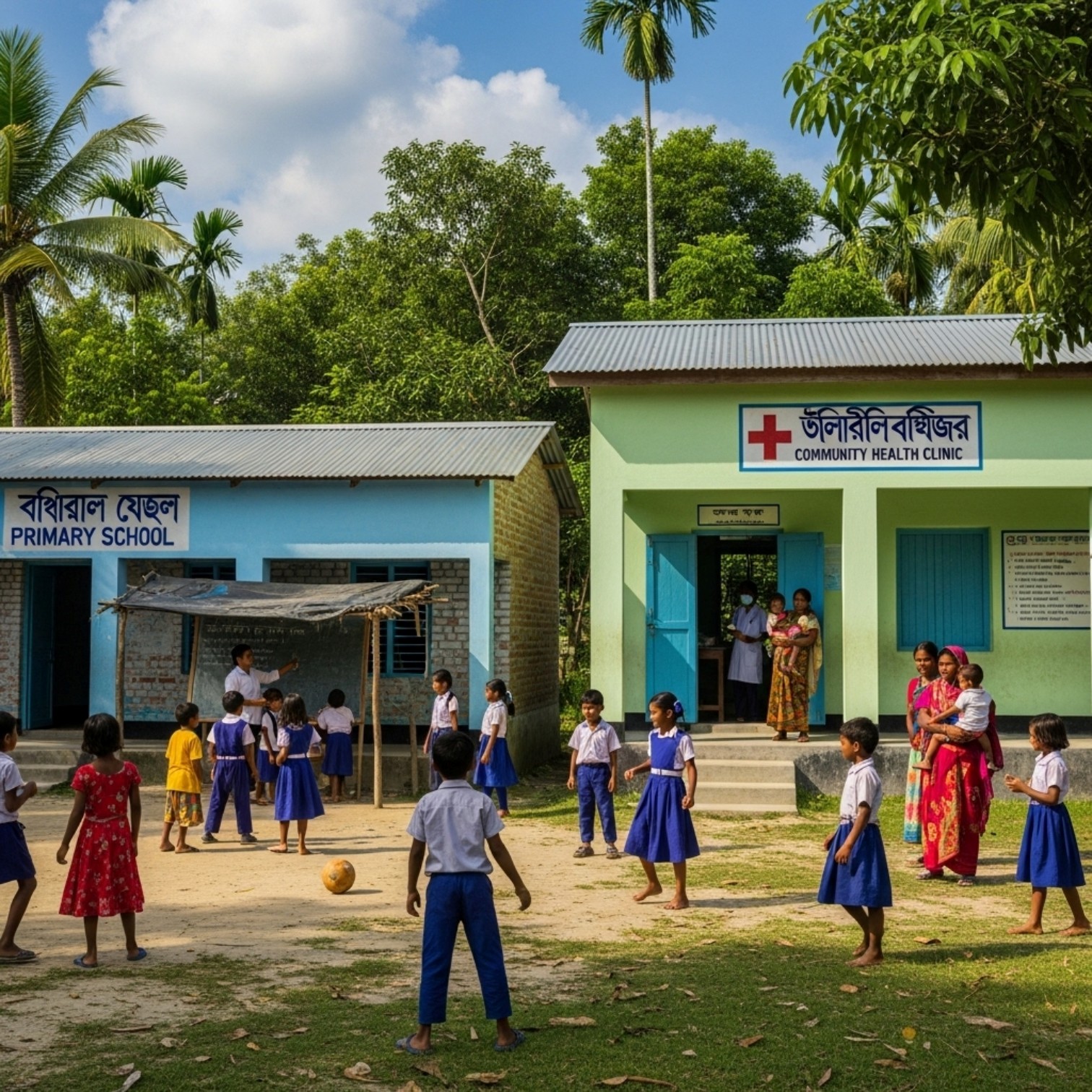

Experts and community leaders in Dhaka urged stronger public investment in education and healthcare to end poverty and give families a real chance at a better life, saying steady services and practical support can stop small shocks from pushing households into long term hardship. The discussion opened with simple human stories to make the point clear, including a handloom weaver who lost work to power looms and now drives a battery rickshaw to support a seven member family and a carpenter who faced a serious health problem and had to borrow large sums to pay for surgery and tests. Speakers noted that health costs often wipe out savings and push people deeper into hardship when care is expensive or distant. Researchers shared recent findings that show nearly three in ten people now live below the poverty line, with a rising share in extreme poverty and many more classified as vulnerable non poor. They warned that many households are only one medical bill or a job loss away from crisis, and that children of poor families often lack the schooling and health care they need to get ahead. Experts pointed out that heavy out of pocket health spending makes families fragile and that policy must respond to different needs in cities and villages. Hossain Zillur Rahman urged focus on four practical areas that matter most to poor families: affordable public transport, affordable housing, accessible primary health care, and quality basic education up to class eight. He said these steps are not distant dreams but require real attention and better use of existing budgets and institutions. Mustafa K Mujeri added that to break the cycle policy must create jobs, open better access to markets, expand savings and credit options, and build skills so families can earn more and save. Panelists recommended achievable measures such as raising the quality of primary schools, increasing public primary health services, running pilot programs for low cost housing, and strengthening local clinics with basic medicines and diagnostics. They called for targeted support for women headed households and programs that prevent children from dropping out of school or entering child labour. Speakers suggested stronger links between social safety nets and public services so cash help and care reach the same families quickly. The tone was positive and practical, with an emphasis on pilot projects, clear targets and regular reviews so good ideas can be scaled up. Experts asked for better coordination among ministries, local governments and community groups to make policy people centered. They urged donors and local leaders to back skills training, small business access to credit, and school and clinic upgrades that show quick wins. In the end, the meeting stressed a simple idea: steady investment in education and health can give children real choices and lift whole families out of poverty by building skills, protecting health and widening opportunity for many more people.