

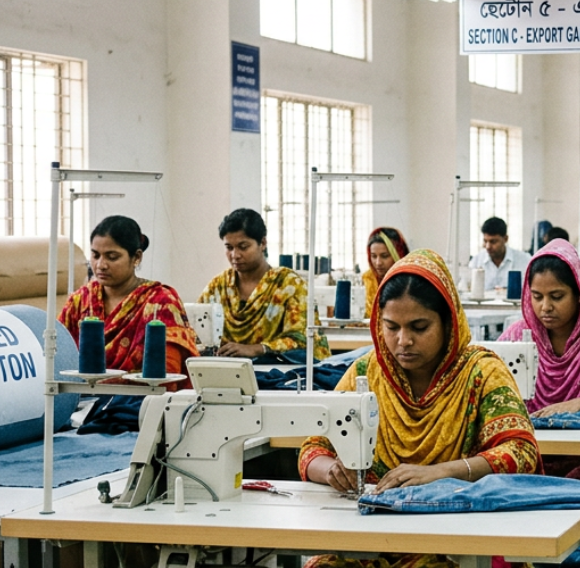

Bangladesh has secured a major breakthrough for its garment industry as a new trade agreement with the United States will allow ready-made garments made from US cotton and synthetic fibres to enter the American market duty-free, easing a long-standing concern for exporters and policy makers. Under the deal, clothes produced in Bangladesh using imported US raw materials will enjoy zero tariffs at US customs, giving local manufacturers a clear price edge over many competitors and rewarding those who choose American cotton as a key input. The agreement comes after months of negotiations that also saw the two countries revise reciprocal tariffs, with the headline rate on many Bangladeshi goods to the US adjusted down while a broad package of US products receives phased duty cuts in Bangladesh. As part of this wider arrangement, Bangladesh will gain duty-free access for about 2,500 products in the US market, including medicines, farm goods, plastics and wood-based items, while the US will receive duty-free treatment for more than 7,000 tariff lines in Bangladesh over a five- to ten-year period, meaning almost all American products will eventually enter the country without tariffs. For the garment sector, the most important part is the special rule that ties the benefit to US-origin fibre, because it turns every shipment of American cotton into a bridge to higher-value clothing exports from Bangladesh. Factory owners say the change will help them offer sharper prices and more flexible sourcing options to global brands that already see Bangladesh as a key supplier, and may encourage them to place larger and longer-term orders. The decision is also expected to shift some sourcing patterns, with spinners and fabric makers in Bangladesh likely to increase their use of US cotton and man-made fibre to make sure finished garments qualify for the duty break. Trade experts note that this arrangement links the interests of farmers in the US with workers and entrepreneurs in Bangladesh, creating a shared incentive to keep supply chains stable. For Bangladesh, which sends about 80 percent of its US exports in the form of apparel, the deal reduces fears about losing competitiveness after global tariff changes and supports plans to grow exports beyond existing levels. Officials believe the agreement will draw fresh investment into spinning, weaving and garment units, support jobs, and deepen economic ties with the world’s largest consumer market, as long as businesses move quickly to understand the rules of origin and adjust their production plans. Industry bodies are already calling for clear guidelines, training and outreach so that even medium and smaller factories can benefit. If used well, the duty-free window for US cotton-based garments could become a powerful tool to strengthen Bangladesh’s position as a trusted, value-driven clothing supplier for years to come.