

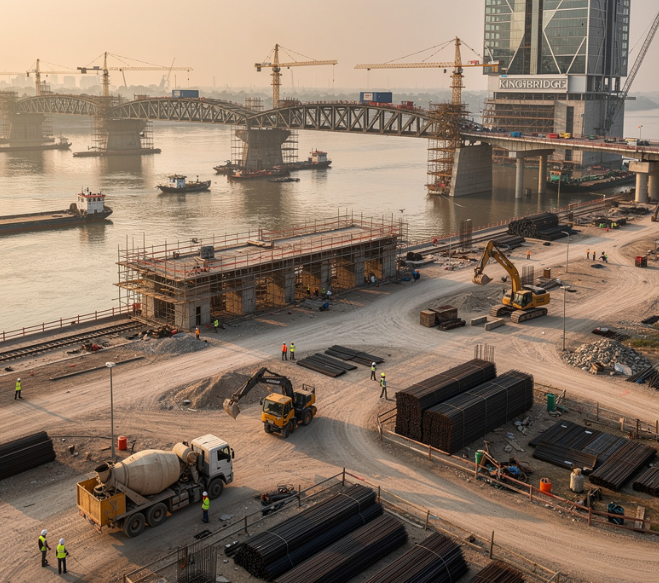

Obayashi Corporation is celebrating a major double success after its KingBridge Tower in Thailand and the Jamuna Railway Bridge project in Bangladesh both received Project Awards from the Overseas Construction Association of Japan, putting a bright spotlight on the company’s work in overseas construction. The awards recognise outstanding projects carried out outside Japan and aim to raise the profile of Japanese builders around the world, so being selected shows that these two projects stand out for their design quality, safety, and contribution to local communities. KingBridge Tower is a high rise office building that rises more than 50 storeys beside the Chao Phraya River in Thailand and was developed with a leading local corporate group. Its striking exterior takes inspiration from the nearby Bhumibol Bridge, so the tower both blends into the cityscape and creates a new landmark along the river. The building has earned respected global environmental and wellness certifications, showing that it balances energy efficiency with comfort for the people who work inside it every day. One of its most eye catching features is a large Sky Lounge that sticks out from the upper floors; engineers built this structure on the ground and then lifted it into place in one piece, a method that improved both safety and accuracy while working high above the street. The project team also used modular methods for mechanical, electrical, and plumbing work so that sections could be assembled more smoothly, helping the building reach completion ahead of schedule and without accidents. The Jamuna Railway Bridge project, delivered by a joint venture that includes Obayashi, created a dedicated rail bridge and new line section next to the country’s existing combined road and rail crossing over the Jamuna, the largest river in Bangladesh. By giving trains their own corridor, the project is designed to speed up inter city travel, cut delays for freight and passengers, and make it easier to move goods between key regions. Construction began under difficult conditions, but careful remote coordination and later the deployment of many on site engineers kept work on track while also passing advanced skills to local staff and subcontractors. Even after major design changes that increased the number of rail tracks, the project was completed within the contract period and without serious accidents, underlining a strong culture of planning and safety. Both projects also created jobs and training opportunities for local workers, supporting long term growth in the areas around them. Together, these award winning efforts show how innovative design, careful teamwork, and technology transfer can support safer, more connected communities in Asia while strengthening global trust in Japanese construction companies.