

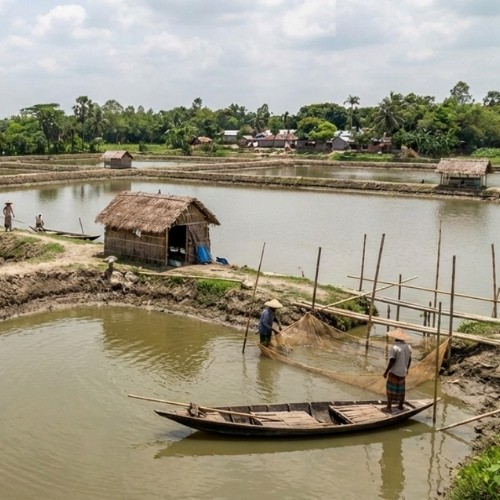

Mixed-culture shrimp farming is gaining popularity in parts of Rajshahi as farmers mix prawns with carp in the same pond to raise more food and earn better money. The Department of Fisheries has been active in promoting the idea by showing farmers new methods, building projection ponds, and giving training so local growers can try the system. One farmer, Raju Sarder of Dighipara, began with 1,500 juvenile shrimp and worked them together with carp. After a few months he reached harvest size where seven to eight prawns now weigh one kilogram, and he expects to bring in about 130 kilograms of shrimp that could fetch between one lakh twenty thousand and one lakh forty thousand taka at current local prices. Many other growers like Chapal Saha and Saiful Islam have started similar mixed farming after seeing Raju’s success. Community hatcheries along with a recently established government-operated shrimp breeding hatchery are assisting by generating post-larvae and larvae, preventing farmers from experiencing a seed deficit. The state hatchery was built on a 3.29 hectare seed farm to help supply healthy young shrimp and it cost around seventy-five lakh taka to set up. Officials say the hatchery has already produced hundreds of thousands of post-larvae and that the supply is being shared with farmers across the division. Staff there carefully nurse young shrimp, using brine water and tested brood shrimps that were collected from coastal and river areas, and they follow strict biosecurity steps to protect the stock. Farmers can buy these hatchlings or get them on loan from neighbours who breed post-larvae, and this makes it easier for smallholders to begin mixed-culture systems. Beyond higher incomes, experts point out that mixed shrimp and carp farming can create jobs, reduce poverty and improve local protein supplies while making better use of a single pond. Growth has been most visible in places like Naogaon and Paba and in other areas where farmers can use hybrid techniques and careful feeding to speed growth. The Department of Fisheries says it will expand the program, give more technical help and run more projects to meet expected demand for hatchlings and fingerlings. As more farmers adopt the model, local traders and markets have shown steady interest, paying strong prices that make the system attractive. With training, simple loans and continued help from hatcheries and government programs, mixed-culture shrimp farming could give many families a new, reliable way to earn cash while strengthening food supplies and rural livelihoods. If farmers work together, share lessons and keep careful records, the success can spread to more villages and help build steady markets and stronger communities that benefit both producers and buyers. This path offers hope for many coastal and inland families.