

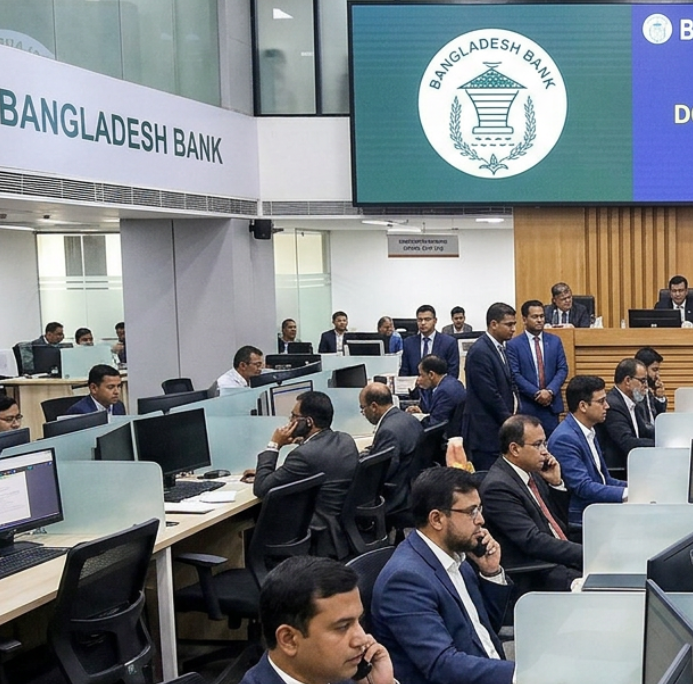

Yields on Bangladesh’s treasury bills have fallen again after a recent auction, as rising liquidity in the banking system eases pressure on government borrowing and sends a calmer signal to money markets. Short term government securities across all three major tenors saw their returns drop by around half a percentage point compared with the previous auction, with the 91 day bill now just above 10 percent and the 182 day and 364 day bills also slightly over this mark. For the government, lower yields mean it can raise funds at a cheaper cost to finance its regular budget and development work, while for banks the new rates show that they are sitting on more cash and are willing to lend to the state at a reduced return in exchange for safety. Experts explain that there are two main forces behind this softer interest rate trend. First, the central bank has been actively buying US dollars from commercial banks through auctions, paying in local currency and effectively pouring fresh taka back into bank balance sheets. As these transactions add up to several billion dollars in the current financial year, lenders find themselves with plenty of liquidity and strong demand for safe assets such as treasury bills. Second, private sector credit growth has slowed in recent months, which means banks are not creating as many new loans for businesses and households as before, leaving even more idle funds available for investment in government paper. Senior bankers also note that deposits in the banking sector have kept rising, deepening the pool of low cost funds at a time when government borrowing has eased because implementation of public development projects is moving slower than planned. Together, these factors are pushing bill yields down from the peak levels seen not long ago, when some tenors were well above 10 percent. Market watchers point out that lower treasury bill rates can gradually influence other interest rates too, including what banks charge on loans and pay on deposits, although the adjustment often takes time and depends on each institution’s funding position and business strategy. For ordinary people, a more stable and slightly cheaper government borrowing cost can support efforts to keep inflation in check and create a friendlier setting for investment and job creation, especially if businesses become more confident about planning ahead and expanding. At the same time, savers who rely on fixed income returns will be watching closely to see how banks respond, as they balance the need to offer attractive deposit rates with the reality of softer yields on government securities in the months ahead. Overall, the latest auction results suggest a banking system that is comfortable, liquid, and well prepared to support growth.