

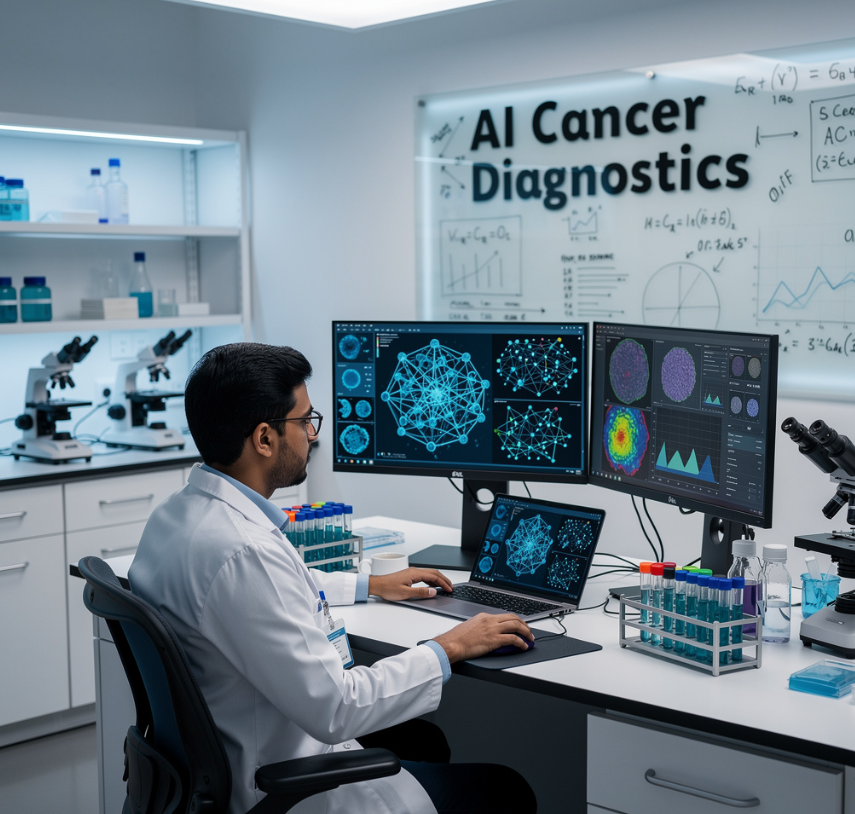

As cancer and other long-term illnesses rise around the world, the work of Bangladeshi researcher Denesh Das is showing how artificial intelligence can help doctors find disease earlier and make faster treatment decisions for patients. Now studying industrial engineering at Lamar University in the United States, he brings together AI, medical imaging and systems engineering to design tools that support busy clinics where experts and resources are often stretched thin. His journey began with a degree in electrical and electronic engineering from Southern University Bangladesh and a later master’s in electrical and computer engineering, building strong skills in intelligent systems, data analytics and optimisation that he now applies directly to healthcare problems. One major focus of his research is AI assisted breast cancer diagnosis, where he has shown that machine learning models can learn from biopsy data to tell the difference between harmless and dangerous tumours with accuracy close to traditional methods. These models can flag high risk cases quickly, helping doctors reduce errors, plan follow up tests sooner and give patients a clearer picture of their condition at an earlier stage. Denesh has also worked on deep learning systems that read dermoscopic images for signs of melanoma, a fast spreading form of skin cancer that is hard to catch by eye alone. By spotting subtle colour and texture patterns that humans might miss, his AI tools could help general doctors and nurses act more confidently in areas that lack specialist dermatologists, especially in low and middle income countries. Beyond cancer, he explores AI driven prediction for silent conditions such as liver disease, where early warning could stop patients reaching hospital only when damage is already severe. What makes his research stand out is a wider systems view: instead of building single algorithms in isolation, he studies how smart models, connected devices and strong networks can work together in an integrated health platform. This includes looking at internet of things monitoring, secure data sharing and real time dashboards that let clinicians watch trends, respond to alerts and manage large groups of patients more efficiently. Guided by his training in industrial engineering, he focuses on making solutions that are reliable, scalable and realistic for real hospitals, not just computer labs. Colleagues say his work is part of a growing wave of Bangladeshi talent shaping the future of digital health worldwide and proving that research from Bangladesh can drive new ideas in global medicine. His story is inspiring students who want to mix coding and engineering into a truly meaningful career path.