

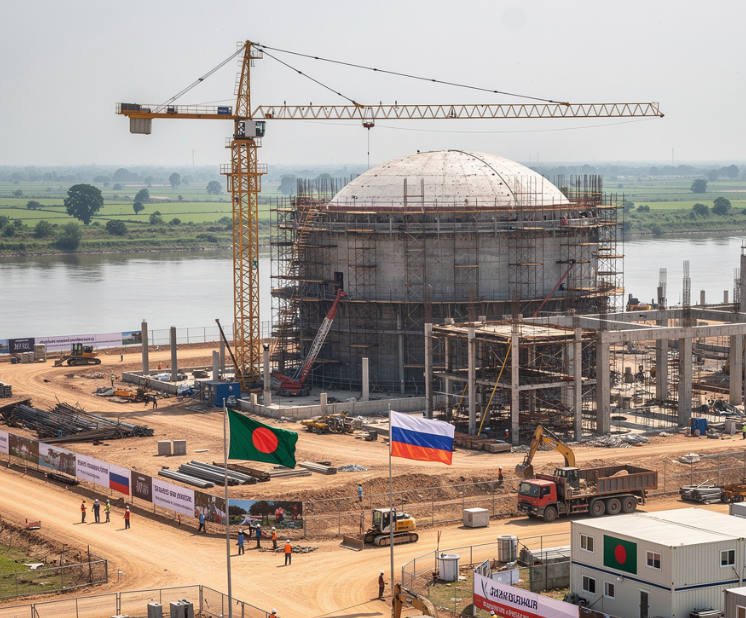

Russia has approved important changes to several intergovernmental loans that finance Bangladesh’s first nuclear power plant at Rooppur, giving the long-term project fresh financial breathing room and a clearer path to completion. Lawmakers in Moscow agreed to amend four loan agreements that support the plant, which is being built by Russia’s state nuclear company and will feature two large reactors designed to supply a major share of Bangladesh’s future electricity needs. According to Russian officials, the updated terms introduce a new way for the two countries to settle payments that avoids problem currencies, helps clear overdue amounts, and waives related penalties, while also extending the period during which Bangladesh can draw on the credit line. In simple terms, the move gives both sides more flexibility so that construction, equipment deliveries, and technical work can continue without being blocked by payment complications. The loans cover most of the project cost, with Bangladesh paying the rest, and have long been central to the partnership that allowed the South Asian country to move ahead with nuclear power instead of relying only on gas, coal, and imported fuel oil. With global energy prices and currency markets under pressure, smoothing the loan conditions is meant to protect that plan and reduce the risk of sudden funding gaps. For Bangladesh, a reliable nuclear plant at Rooppur is seen as a key step toward ensuring steady baseload power for homes, farms, and factories, limiting blackouts and supporting new industries that depend on constant electricity. For Russia, the project confirms its role as a major supplier of nuclear technology, engineering services, and finance in Asia, and shows that it is willing to adjust deals to keep strategic projects moving forward with trusted partners. The reactors planned for Rooppur use modern designs with multiple safety systems, and the wider project includes training for Bangladeshi engineers, technology transfer, and support for future operation and maintenance. Energy planners hope that once the plant starts feeding power into the grid, it will ease pressure on gas reserves and reduce the need for costly fuel imports, while also lowering carbon emissions compared to older fossil fuel plants. The revised loan framework also sends a wider signal to investors and international agencies that Bangladesh and Russia are prepared to solve financial challenges jointly rather than let them slow progress. As work continues on site, the smoother financial channel created by the new agreements is expected to help keep contractors paid, timetables realistic, and momentum strong for one of Bangladesh’s most important infrastructure projects today and tomorrow.