

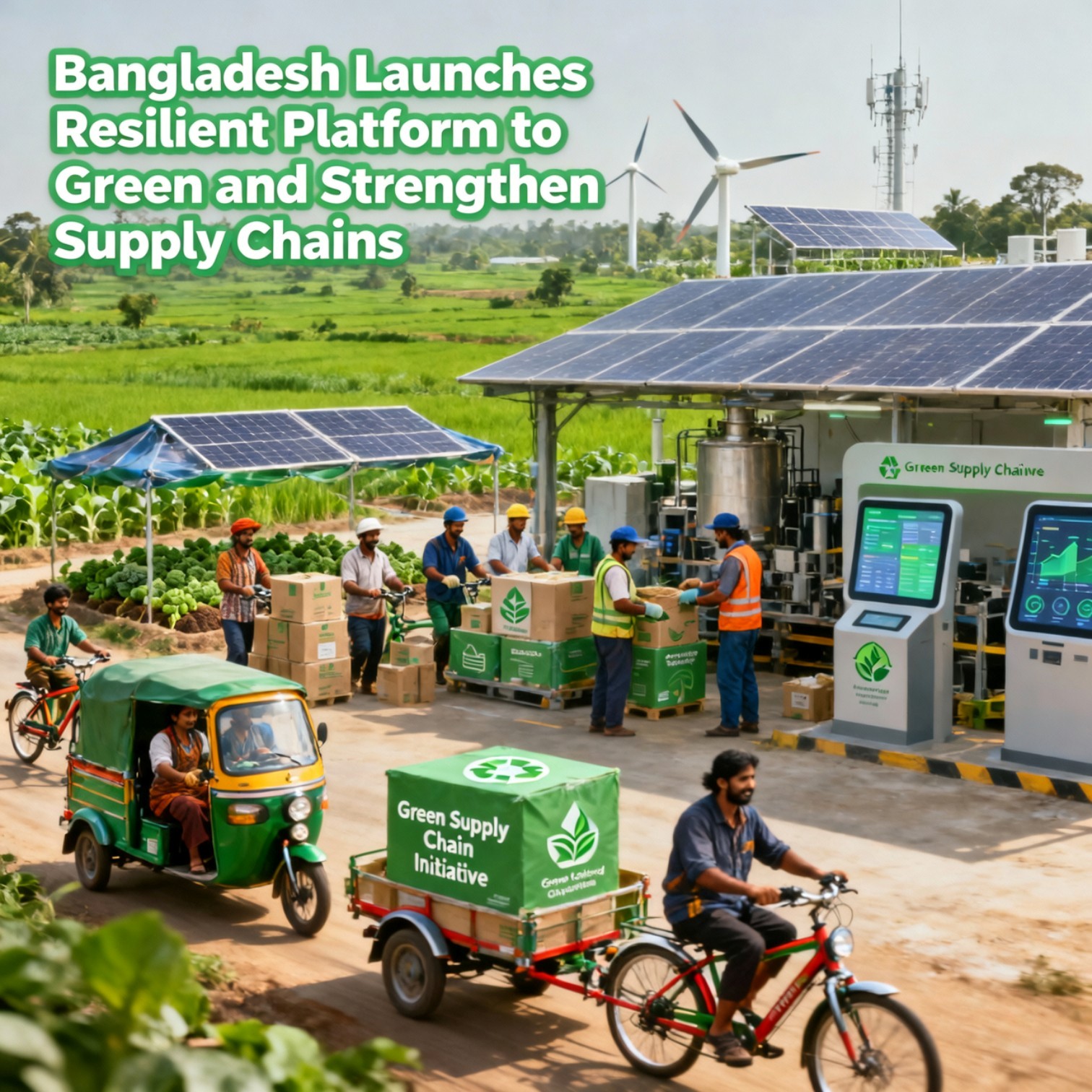

Bangladesh has launched the Resilient Supply Chains for Sustainable Trade and Investments Platform, a clear step to make supply chains stronger, fairer and greener. Built by the Bangladesh Investment Development Authority with support from the Ministry of Commerce, the International Labour Organization and the United Nations Development Programme, the platform will be a shared space where government, businesses and partners can plan and act together. It aims to help the country improve trade and attract new investment while raising labour standards and protecting the environment as the economy moves forward. The hub will bring people together to share ideas, build skills and set policies that help firms sell more and create better jobs. The platform will support smoother trade rules, better links between factories and markets, and clearer rules that make it easier for industries to grow without leaving workers behind. It will run training and policy programs, collect and share information, and back projects that show how greener methods can cut costs and open new markets. Organisers called for a practical road map with clear steps so the work leads to real results, not just discussion. Businesses were invited to join with government and agencies so public and private action can move in the same direction. By making supply chains more resilient, firms can handle shocks and keep making goods even when disruptions occur, which helps both small suppliers and large exporters. The platform seeks to make sure investments follow good social and environmental practices, so growth gives people steady work and keeps natural resources safer. Organisers hope this will attract investment that values quality, skills and fair pay, and that it will help local firms move into higher value products and services. The effort will link training with the needs of modern factories so young people can learn useful skills and find stable work. It also aims to promote cleaner production, encourage renewable energy, protect rivers and coasts, and reduce waste. Partnerships, research and small pilots will show what works and make it easier to scale up good ideas across regions and industries. International partners were asked to join so the platform can bring in technical help and funding, and so Bangladesh can align its rules with global trade partners. Stronger trade ties and clearer rules can open new buyers and steady demand for homegrown products, while better worker protections and training can lift incomes and community well being. If the platform keeps people working together, shares practical knowledge and supports projects that balance profit with people and the planet, it can help the country grow in a way that lasts and benefits many. Leaders say the platform is a practical tool to shape fairer future for everyone.