

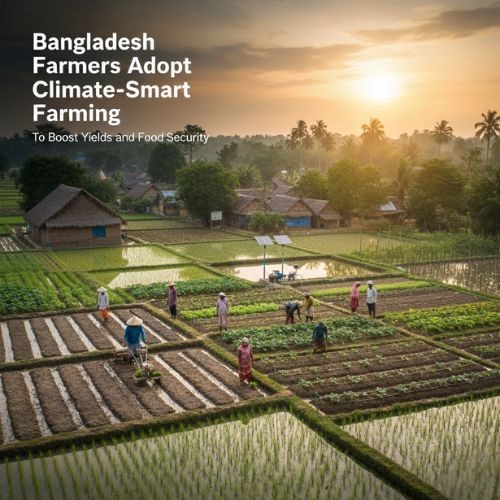

Farmers in Rangpur are boosting food production by using climate-smart farming methods that help crops survive floods, droughts, heat, salinity and pests, and make farming more reliable for the future. Researchers and scientists say steady research and new seed varieties are making a big difference, with stress-tolerant rice types and micronutrient-rich seeds now reaching more fields. Local farms are using more machines, better irrigation, balanced fertilizers, and safer pest control, and extension workers are teaching these methods through hands-on demos and video lessons so farmers can learn faster. Experts explain that growing varieties that resist floods, droughts, cold and disease, plus crops fortified with vitamin A and zinc, raises yields and improves nutrition for families. Agriculture institutes are working to develop high-yield seeds that match what farmers need, and they are sharing hybrid seed technology so local growers can multiply good seeds at home. Farmers in Rangpur report that using quality seed, compost and modern tools is increasing crop intensity and steadying harvests year after year. The move toward conservation practices — such as reduced tillage, integrated pest and nutrient management, agroforestry and resource-conserving methods — helps protect soil and water while keeping farms productive. Officials and advisers say that when farmers get reliable seeds, training and easy access to new tools, they can plan crops better and face storms and heat with more confidence. Video based training and ICT tools are helping young farmers and women learn new techniques without long trips to training centers. Experts also stress using balanced fertilizers and careful pest control to avoid damage to the environment while keeping prices lower for consumers. These changes already add to the nation’s rice production base and help feed a large population now and in the years to come. If farmers keep adopting these smart steps, food production could rise further and make small farms more profitable and resilient. The benefits extend beyond yields: more stable harvests support local markets, give families more food and income, and help schools and clinics in rural places stay open and supplied. With steady support from research centres and extension services, the push toward climate-smart agriculture is building a stronger, cleaner farming system that aims to feed more people while protecting the land for future generations. Today the country harvests more than 39 million tonnes of Aman, Aush and Boro rice, helping feed about 160 million people. Research centres like BRRI develop the stress-tolerant varieties behind this rise. A plan to raise output by almost one and a half times will help meet needs of a projected 220 million people. Extension pilots and private seed producers are scaling successful methods, creating jobs and new markets for resilient seed and equipment, and more.