

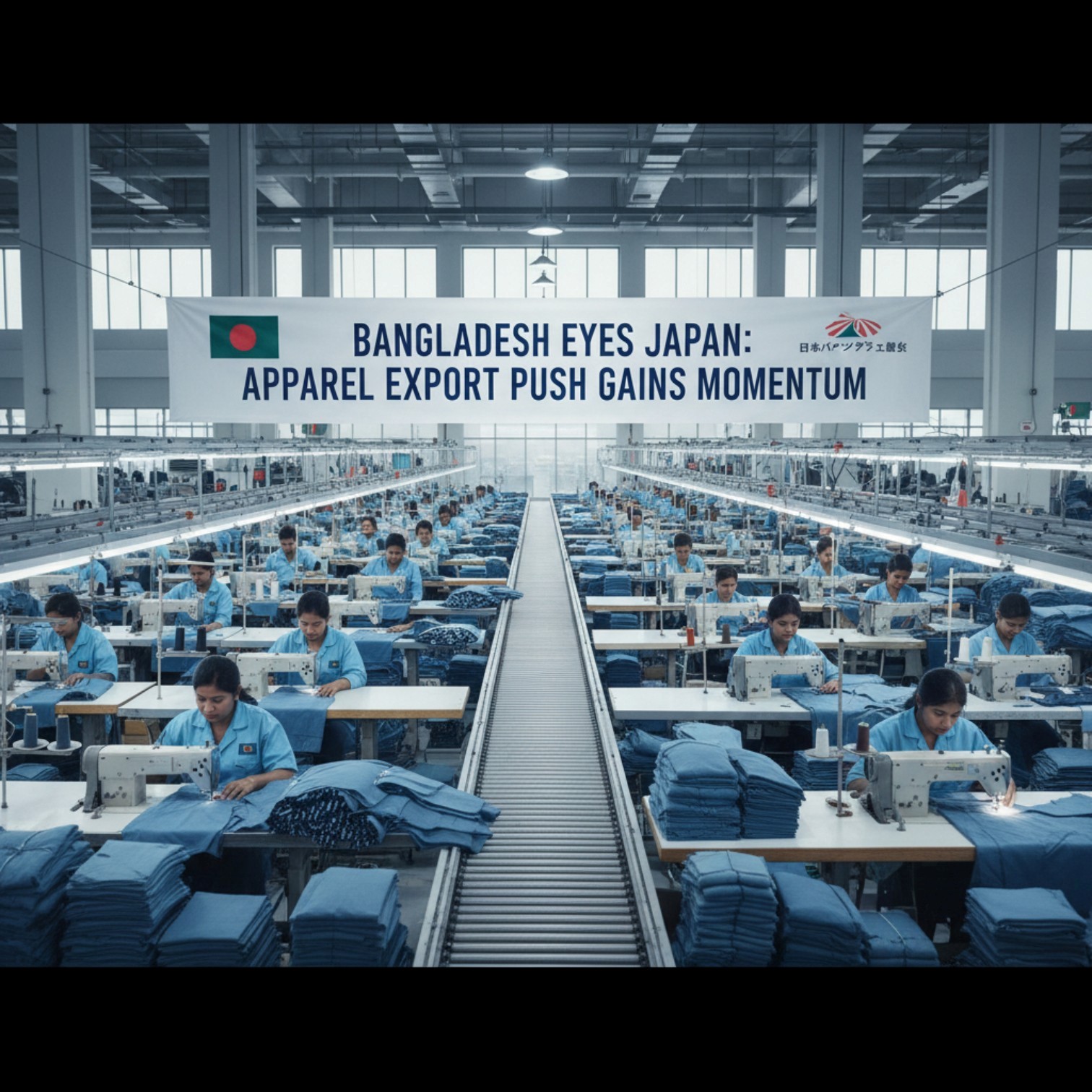

Bangladesh is stepping up efforts to boost its apparel exports to Japan, seizing a clear opening as Japanese buyers move to diversify beyond China. This shift offers a fresh chance for garment makers who have been investing in higher quality, timely delivery, and greener production. A trade pact now being negotiated could lower tariffs and smooth trade steps, which would make it easier for Bangladeshi products to reach Japanese stores. Japan is a large and demanding market known for careful design, strong quality checks, and shoppers who choose durable, well made items. That makes Japan both a challenge and a great prize for exporters who can meet its rules. Bangladeshi exporters say they welcome the challenge and are changing how they work to match what Japanese buyers want. They are improving factory compliance, adding better machines, training workers on quality, and adopting cleaner ways to make clothes. Many factories are also focusing on sustainability and transparency, because Japanese companies often prefer partners who can show clear proof of fair treatment and lower environmental impact. The wider sourcing trend sometimes called “China Plus One” is helping this shift, as more buyers look for reliable suppliers in different countries. China still supplies many garments to Japan, but its share has fallen and other exporters have taken part of the market. Bangladesh has seen steady growth in exports to Japan, thanks in part to its large garment base and growing skills in value added work like careful stitching and finishing. Recent figures show exports have risen from roughly nine hundred and forty five million dollars to about one point four one billion dollars over the past few years, which gives firms a stronger base. Industry voices note that winning Japanese buyers takes time because trust is earned by repeated good performance, clear communication, and on time shipments. Japanese retailers often form long term partnerships with manufacturers who prove they can keep high standards and keep delivering when promised. To meet those standards, Bangladeshi firms are tightening quality checks, improving packing and shipping processes, and working closely with buyers to learn exact needs. Sustainability steps such as water saving, waste control, and energy use are becoming common in factories that want to attract buyers seeking ethical supply chains. The combination of buyer interest in new sourcing, stronger factory practices, and a trade deal that could ease costs sets up a chance for more sales in Japan. Challenges remain and work is needed to match Japan’s detailed tastes and strict inspections, but industry leaders are upbeat. They say that by staying, improving quality, and showing care for the planet and workers, Bangladesh can grow as a trusted partner in Japan’s apparel market firmly.