

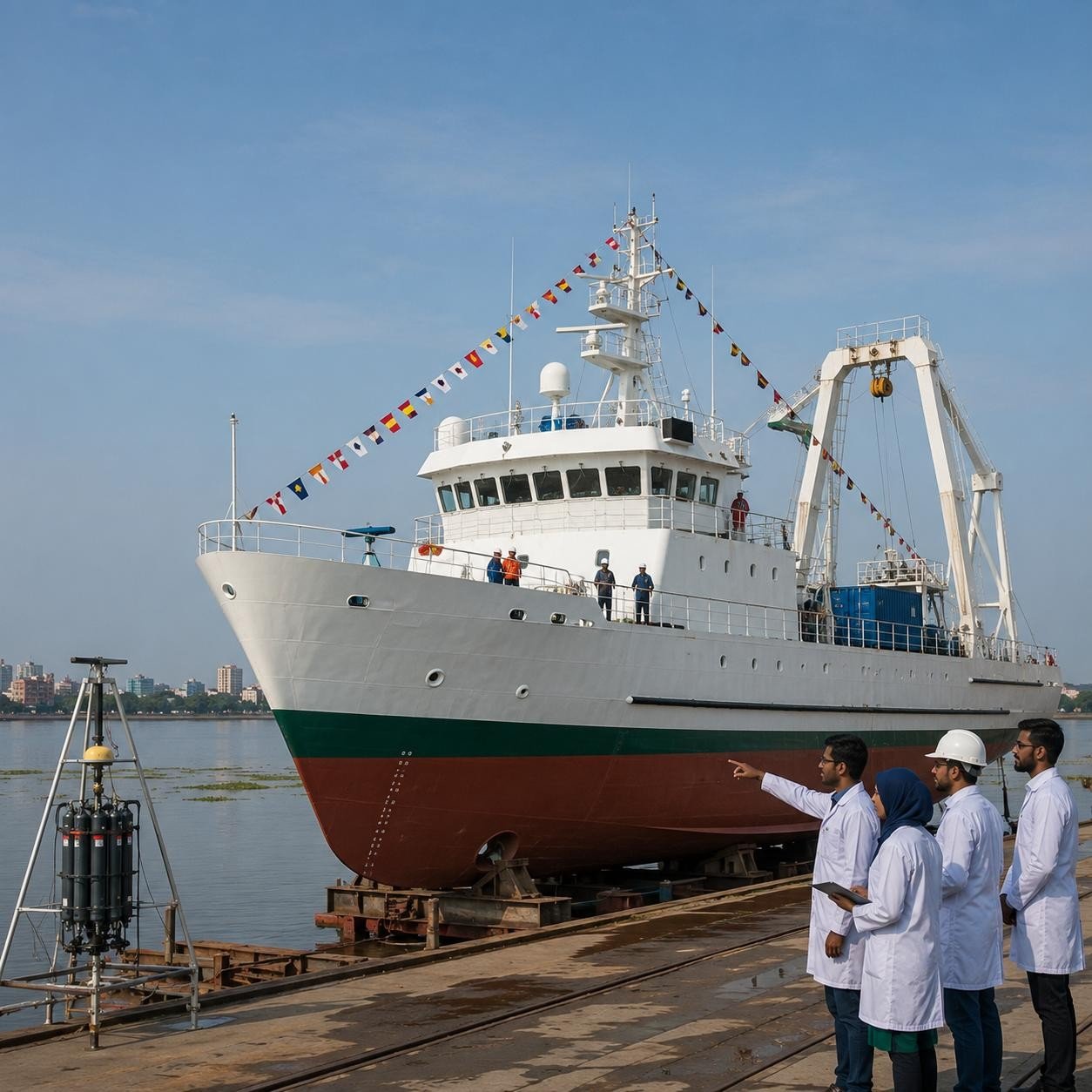

Bangladesh is building its first oceanographic research vessel at Khulna Shipyard, giving local scientists a powerful new way to study the deeper parts of the Bay of Bengal. The project is an important step for both national shipbuilding and marine science because the vessel is being built inside the country rather than purchased from abroad. Designed by a British marine engineering company, the ship will be 32 metres long and equipped with modern laboratories, sensors, mapping tools, and data systems. It will allow researchers to examine marine life, fish stocks, seabed conditions, water quality, minerals, seaweed, and the effects of climate change. At present, many studies depend on small fishing boats that can collect information mainly near the coast. The new vessel will let scientists travel farther and conduct longer research missions. It will carry 23 scientists and crew members and support continuous work for more than a week at sea. Three specialised laboratories will be available on board, including wet, dry, and data analysis spaces. This means samples can be tested quickly instead of waiting until the vessel returns to land. Satellite connections will also allow researchers to send information directly to ocean data centres. Better knowledge of the sea can help Bangladesh manage its marine resources more wisely. Scientists may identify where fish are concentrated, understand whether stocks are healthy, and study new resources without damaging the environment. Seabed maps can support safe planning, while climate and water studies can improve knowledge of storms, sea changes, and coastal risks. The wider project also includes fast cabin boats, a pontoon, a jetty, and other facilities that will support research work. Khulna Shipyard has already built and repaired many vessels, and this project will add a new level of technical experience. Local engineers, welders, electricians, designers, and technicians can gain knowledge from building a science-focused ship with advanced equipment. That experience may support future vessel projects and reduce dependence on overseas construction. The research vessel will not solve every challenge because its size will limit operations during difficult weather. Still, it will greatly improve the country’s current ability to collect reliable marine data. Bangladesh has a large sea area with valuable natural resources, but much of it remains poorly studied. By combining domestic engineering with modern scientific tools, the project can support responsible fishing, environmental protection, education, and the blue economy. It also shows young researchers that important scientific work can be carried out using facilities built by Bangladeshi hands. Universities may use the vessel for training, joint studies, and field experience. Reliable information from the Bay can guide businesses and public agencies while helping communities protect the resources that support coastal life and livelihoods for future generations as well.