

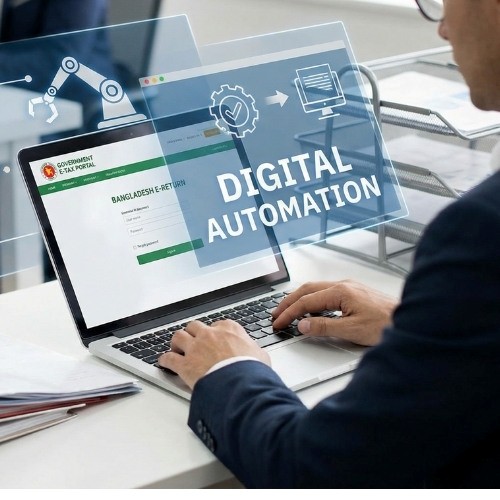

Bangladesh’s tax authority has launched a new automated system that credits import-stage income tax directly into taxpayers’ e-returns, a change meant to simplify filing and end long-standing headaches for importers. The system links customs bill records with the e-return platform so advance income tax paid during imports is shown automatically when a trader enters business income, and the software then adjusts that amount against the total tax due. For many traders this will remove a tedious step where they had to chase manual credits and paperwork, and it promises a clearer view of tax liabilities when returns are filed. The new link is made possible by integrating customs data with the tax agency’s online filing service so bill-of-entry-wise tax details appear on screen without extra uploads from business owners. Tax officers say the move aims to reduce errors, speed up return processing and reduce visits to tax offices, while software checks help ensure the credited amounts match official customs records. Small and medium importers may gain most at first because clearer crediting helps manage cash flow and stops delays caused by missing or mismatched paperwork, and larger firms should also see smoother reconciliation. The system will show each advance tax amount when a taxpayer fills out income sections so the final tax due is calculated on the spot, which can make filing faster and less stressful for accountants and business owners. Traders and trade groups welcomed the step as practical and helpful, and they noted that the change fits with broader efforts to digitise tax services and cut red tape. The platform’s automatic treatment of import-stage tax also supports better record keeping because entries are pulled from trusted customs sources, making audits and checks simpler for both companies and officials. Officials say this is part of wider digitisation to cut paperwork, speed refunds, help small firms manage cash flow, and improve tax accuracy, making it easier for businesses to comply without visiting tax offices or waiting for manual reconciliation, and support faster trade and investor decisions overall.