

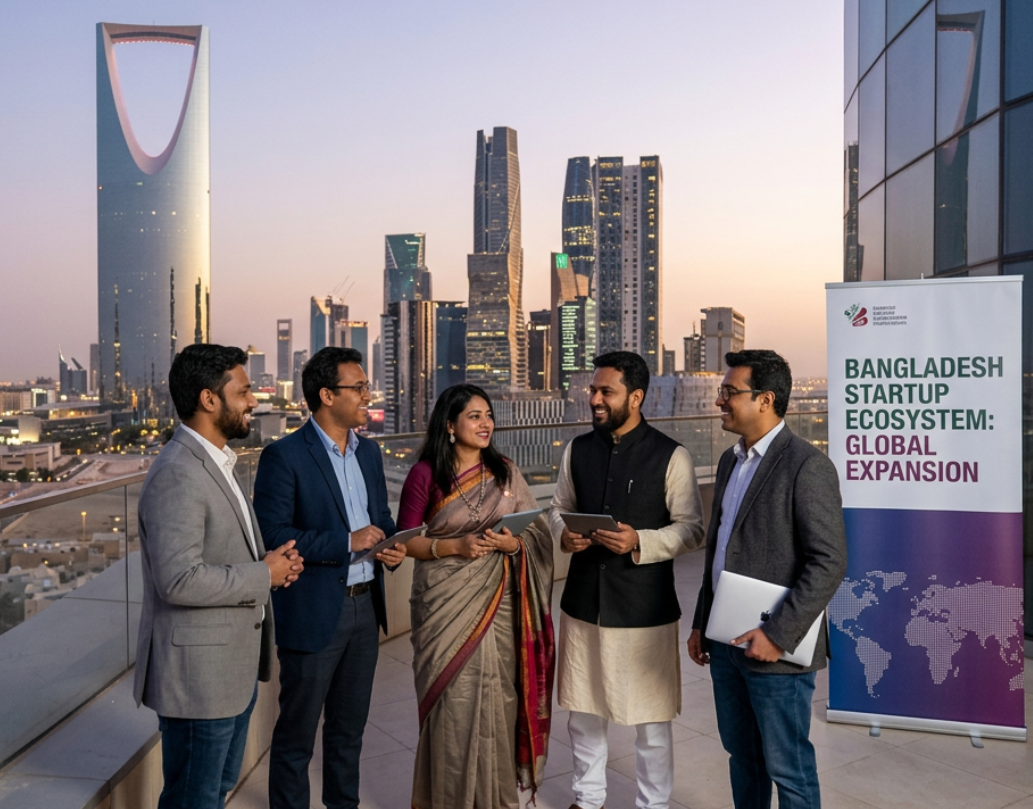

Bangladesh’s startup scene is going through a reset as more founders realise that the old dream of becoming the “next Asian tiger” by only chasing money and mentors in Southeast Asia is starting to fade, and that a fresh set of chances is opening much closer to home in the Gulf. For years, most young companies were told to register abroad, pitch in regional hubs, and build for customers that felt distant from life in Dhaka, Chattogram, or other local cities. Now funding pools in those markets are shrinking and investors there are asking for tougher proof of profit, while at the same time new funds, programmes, and corporate partners in Gulf countries are actively inviting teams from Bangladesh to bring their ideas, talent, and products to fast growing markets. Recent deals where Bangladeshi firms joined hands with partners in Saudi Arabia and the wider Gulf show that this is more than just talk and that real money, larger customer bases, and long term partnerships are already beginning to flow along this corridor. Companies in sectors like delivery, education technology, marketing tools, and mapping services are finding that Gulf clients often have stronger spending power and a clear need for digital services that can scale quickly and solve daily problems in business, transport, and learning. At the same time, large Bangladeshi communities living and working across the Gulf can act as early users, local champions, and trusted guides who help founders understand culture, rules, and customer habits on the ground. Instead of feeling stuck in a “dead” ecosystem, the message for founders is to redraw their map: keep building solid businesses at home while treating the Gulf as a natural second market, not a faraway dream. That means designing products that can work in both places, hiring team members who know Arabic and English, and choosing investors who are ready to open doors in cities like Riyadh, Jeddah, Dubai, and beyond. It also means being more careful with cash, running lean operations, and focusing on real value rather than just growth for its own sake, because global investors now look closely at how wisely every taka is used. If founders, support organisations, and policy makers can work together to make it easier to plug into Gulf networks, the next wave of success stories from Bangladesh may come from teams that dared to look west, not only east, proving that the dream is not over, it has simply moved to a new and more promising stage. Over time, this shift can support jobs, stronger skills, and deeper ties between Bangladesh and Gulf economies, giving young builders the confidence that their homegrown ideas can travel, compete, and win on a regional stage.