

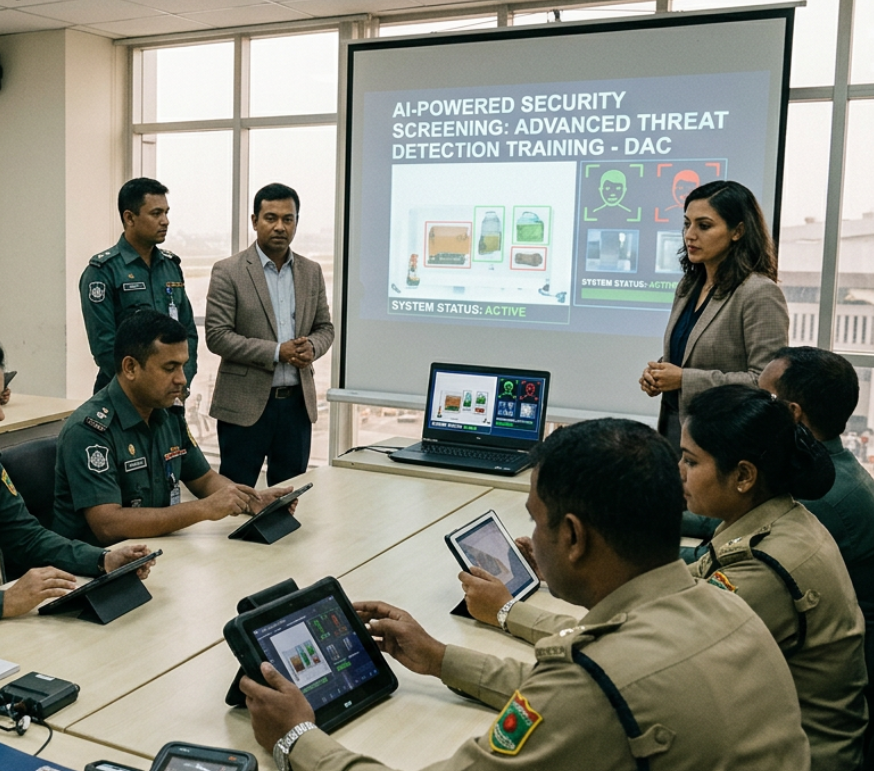

A training workshop on how artificial intelligence could affect compliance with the Chemical Weapons Convention and airport safety has been held at Hazrat Shahjalal International Airport, giving frontline officers new tools to protect the country from chemical threats while still supporting smooth trade and travel. The day-long event brought together 30 participants from customs, cargo and courier sections at the airport, all of whom deal directly with goods and materials that pass through one of the main gateways for chemical products entering Bangladesh. Trainers explained in clear language how fast-developing AI tools can be misused by criminals or hostile actors to design dangerous substances, hide suspicious shipments, or confuse traditional monitoring systems, and why airport staff must now think beyond paper documents and simple visual checks. Using real-world scenarios, they discussed how AI-generated instructions or images could help someone bypass rules, and how smart software might be used to spot patterns in cargo data, passenger records or routing information that human eyes might miss. The workshop placed special focus on the idea of “dual use”, meaning that the same AI technology can be used for both helpful and harmful purposes, so officers need to understand not only what the tools can do but also who is using them and with what intention. Representatives from the Bangladesh National Authority for the Chemical Weapons Convention guided sessions on legal obligations, international reporting, and the specific risks linked to certain chemicals, making sure trainees understood how their daily decisions fit into a wider global security system. They also outlined practical steps that airports can take, such as improving coordination between customs, civil aviation and security agencies, updating standard operating procedures, and sharing alerts quickly when unusual shipment patterns appear. At the closing session, certificates were handed out and senior officials praised the trainees for their attention and questions, urging them to act as mentors for colleagues back in their own units. Speakers stressed that investing in training is just as important as buying new machines, because even the best scanners and software are only effective when skilled people know how to use them and can judge when something does not feel right. Participants said the workshop helped them see AI not only as a threat but also as a potential ally, since properly designed systems could help them prioritise inspections, reduce false alarms and keep honest traders moving efficiently. They left with a clear message: vigilance.