

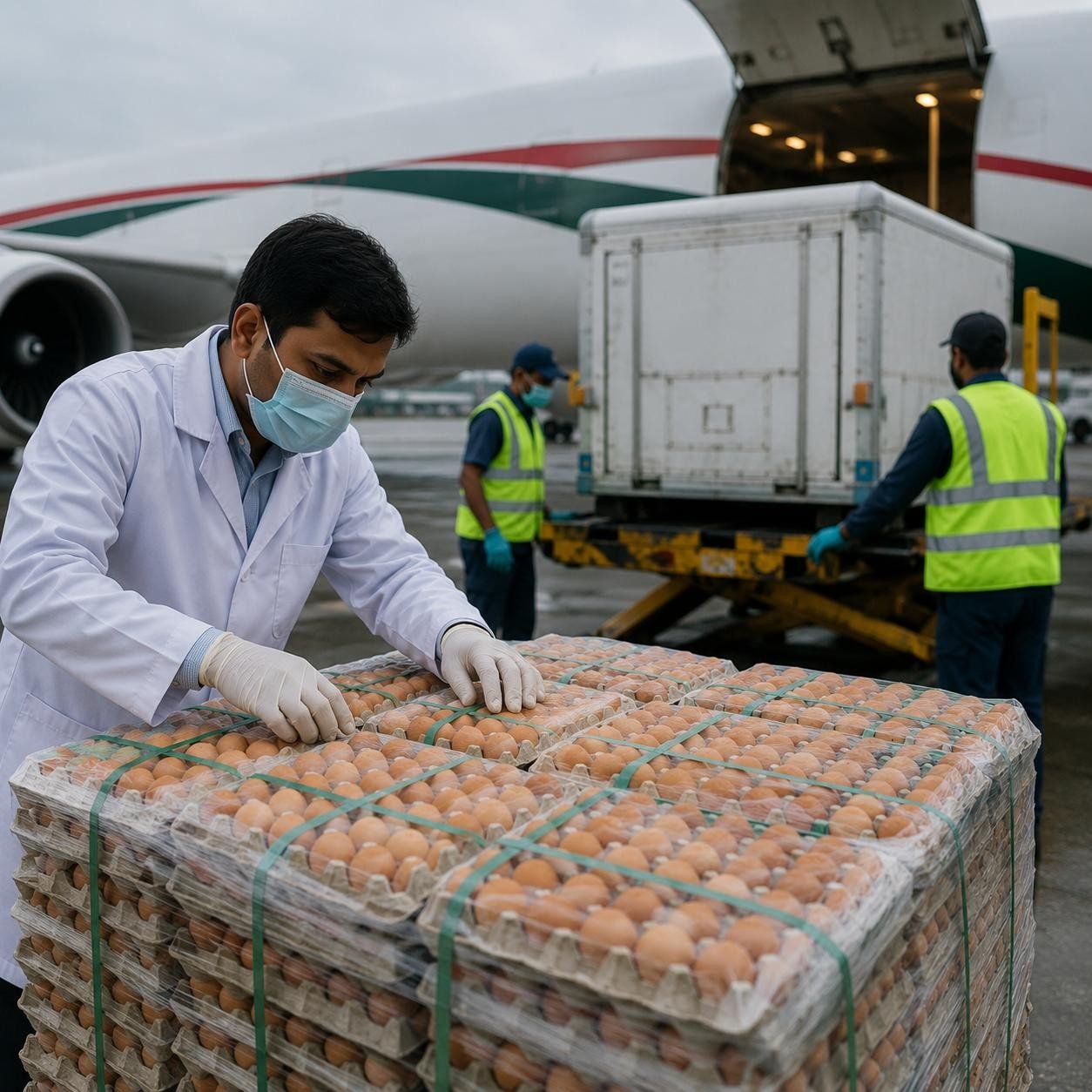

Kazi Farms has sent Bangladesh’s first export shipment of parent hatching eggs to Nigeria, opening a new international market for the country’s poultry and agribusiness sector. The consignment contained 10,440 eggs from the Ross 308 broiler breed and was valued at $18,729. It left through the cargo facilities at Hazrat Shahjalal International Airport, marking the first time Bangladesh exported hatching eggs for commercial use abroad. Parent hatching eggs are used by poultry producers to raise chicks for meat production. Their export requires careful breeding, disease control, handling, storage, packaging, and air transport because the eggs must arrive in good condition. Completing the first shipment shows that local companies can meet these demanding steps and supply specialised agricultural products to overseas buyers. The trial also creates a chance to build a regular trade relationship with Nigeria and other African markets, where demand for poultry products is growing. If the shipment performs well, Kazi Farms plans to explore continued exports of hatching eggs and possible shipments of table eggs for human consumption. A successful export programme could benefit more than one company. Breeding farms, feed producers, veterinarians, laboratories, packaging suppliers, cold-chain operators, airport cargo teams, and transport companies may all gain new business. It can also create skilled jobs in farm management, animal health, quality testing, and export documentation. The shipment adds a new product to Bangladesh’s export basket, which is important for reducing dependence on a small number of industries. Poultry exports can bring foreign currency while encouraging farms to improve health, safety, and production standards. However, domestic demand must remain protected, and export growth should be based on stable local supply. Buyers will expect consistent quality, reliable delivery, and clear proof that eggs are free from serious diseases. Strong veterinary checks and internationally accepted certificates will therefore be essential. Producers must also manage temperature, timing, and handling carefully throughout the journey. Bangladesh can support future growth by improving animal health laboratories, cargo storage, exporter training, and market research. Trade missions and business events may help companies find buyers in other countries. The first shipment is small compared with major export industries, but its meaning is larger than its size. It shows that Bangladesh’s livestock sector can move into specialised global markets when businesses, regulators, and technical teams work together. With careful quality control and responsible expansion, hatching-egg exports could create new income, strengthen agribusiness skills, and build international confidence in Bangladeshi poultry products. Regular shipments could encourage poultry farms to improve breeding records and biosecurity. Universities may prepare specialists in poultry genetics and export quality. If buyers receive healthy eggs on time, Bangladesh could build a reputation in African markets and explore partnerships for chicks, feed, and technology.