

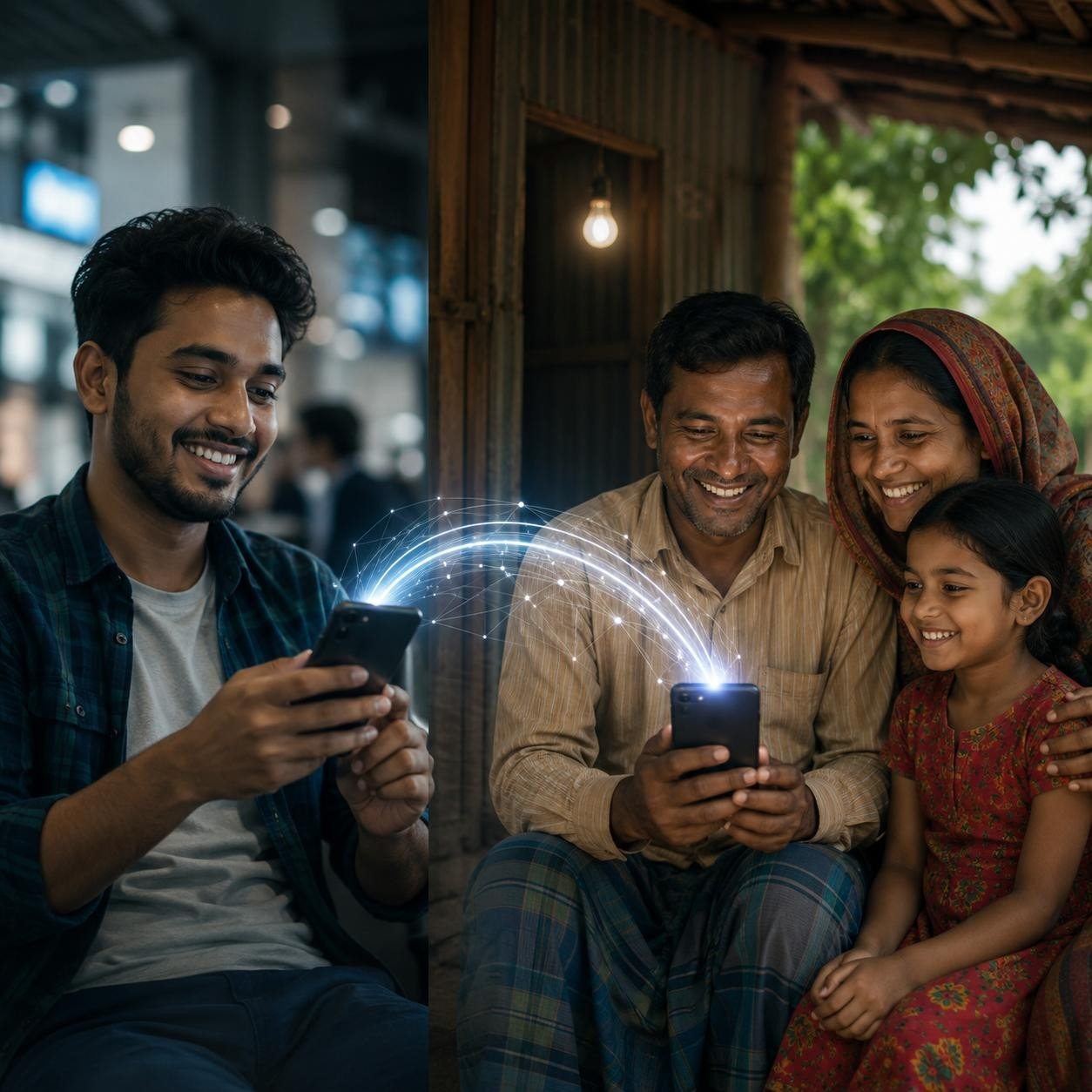

A new research initiative is exploring how an inclusive instant payment system could make international remittances faster, cheaper, and easier for families across Bangladesh. The proposed approach would connect banks, mobile financial service providers, payment companies, and other financial institutions through shared digital infrastructure. Instead of each service operating as a separate island, customers could move money between different accounts and providers in real time. This type of connection is known as interoperability, and it can create more competition while reducing repeated fees and delays. Remittances account for around 6 percent of Bangladesh’s economy, so even a small reduction in transfer costs could leave families with a meaningful amount of extra money. The research will examine payment technology, regulations, business incentives, user behaviour, and examples from other countries. It will also study real-time cross-border payment routes that could allow workers overseas to send money directly into a bank or mobile account at home. A survey of Bangladeshi migrants in six major destination countries will explore why people choose formal or informal channels. The study will consider transfer fees, exchange rates, speed, trust, documentation, and whether recipients can easily access financial services. Understanding these choices is important because many workers still use informal systems when official services feel expensive, slow, or difficult. The planned instant-payment network is being developed on an open-source platform that can be adapted locally and expanded over time. It is expected to support feature-phone users, simplify account opening, reduce failed payments, and strengthen fraud prevention. Future connections may include microfinance institutions, allowing more rural customers to take part. A successful system will need strong governance, fair pricing, reliable settlement, and a simple way to resolve disputes. Customers must know what a transfer will cost, when it will arrive, and whom to contact if something goes wrong. Security tools should detect unusual activity without creating unnecessary barriers for honest users. Bangladesh also spends around Tk20,000 crore each year managing cash, so wider digital payments could reduce part of that cost while improving transaction records. However, people will only move away from cash when services are affordable, dependable, and easy to understand. Better access to phones, internet, agents, and customer support will remain important. The initiative could also create safer ways for non-resident Bangladeshis to save or invest through formal channels. By building one connected payment system around user needs, Bangladesh can lower remittance costs, increase financial inclusion, and strengthen trust in digital finance. The research offers a chance to design the system carefully before full expansion, using evidence from migrants, families, financial providers, and international experience. If implemented responsibly, instant connectivity can help more of every hard-earned transfer reach the people it was meant to support at home.