

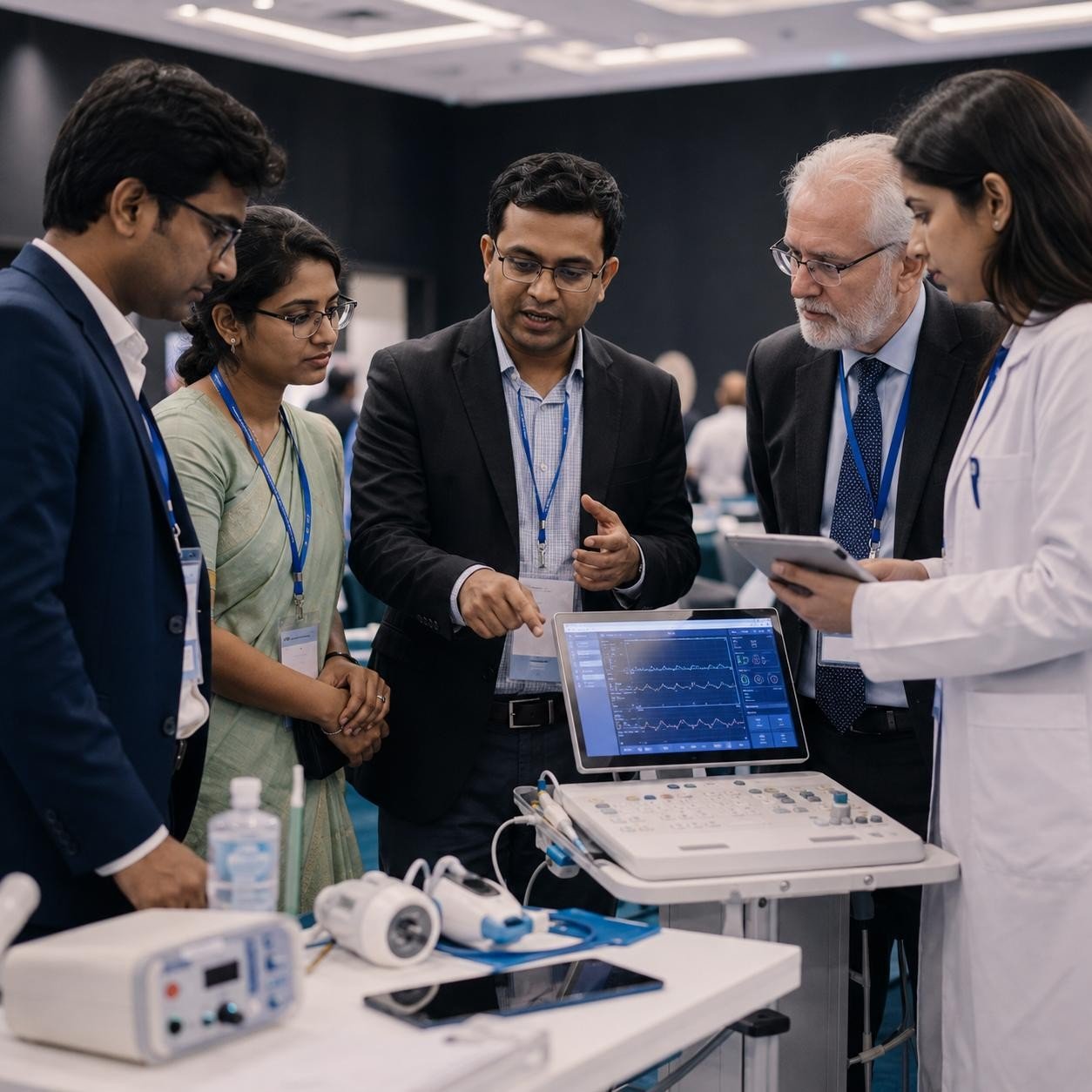

An international healthcare technology conference at Dhaka University brought scientists, doctors, engineers, researchers, entrepreneurs, and policy experts together to explore affordable solutions for low and middle-income countries. The event focused on technologies that can improve healthcare while remaining practical, accessible, and sustainable for communities with limited resources. This goal is important because many medical tools are too costly or difficult to maintain in rural clinics and smaller hospitals. A useful healthcare invention must fit the place where it will be used. It should be safe, simple to operate, repairable, and affordable for both patients and service providers. Participants discussed how local research and engineering can support areas such as telemedicine, newborn care, diabetic foot treatment, diagnosis, and medical equipment. Bangladesh has already made progress in these fields, but stronger cooperation could help successful ideas move from laboratories into hospitals and communities. Universities can provide research and testing, doctors can explain patient needs, engineers can design working tools, and businesses can support production and distribution. Public institutions can help with standards, approval, and wider use. When these groups work separately, good ideas may remain small. When they work together, a useful device or service can reach many more people. The conference highlighted the value of producing more medical equipment locally. Domestic manufacturing can reduce import dependence, lower repair delays, and create technical jobs. Local products may also be better suited to Bangladesh’s climate, power supply, language, and health system. However, locally made equipment must meet strong safety and quality standards. Careful trials, honest results, user training, and regular maintenance are essential. The event included experts from Bangladesh and other countries, allowing participants to share lessons from different health systems. Low and middle-income countries often face similar challenges, including limited budgets, shortages of trained workers, weak transport, and uneven access to specialist care. Sharing practical solutions can prevent repeated mistakes and speed up progress. Students and young researchers also benefit from seeing how science can address human needs. They may be inspired to work on low-cost diagnostic tools, digital health platforms, portable devices, or safer treatment systems. The strongest outcome of a conference comes after the discussions end. Research groups need to test ideas, build partnerships, seek responsible funding, and measure whether their work truly improves care. Clear follow-up can turn presentations into useful products and services. By focusing on affordable and appropriate technology, the gathering showed that healthcare innovation does not always need to be expensive or complex. It needs to solve a real problem reliably. Bangladesh can strengthen healthcare access by supporting local talent, careful research, and cooperation across medicine, engineering, education, and industry. Such efforts can help quality care reach people in remote areas while building national knowledge and manufacturing capacity.