

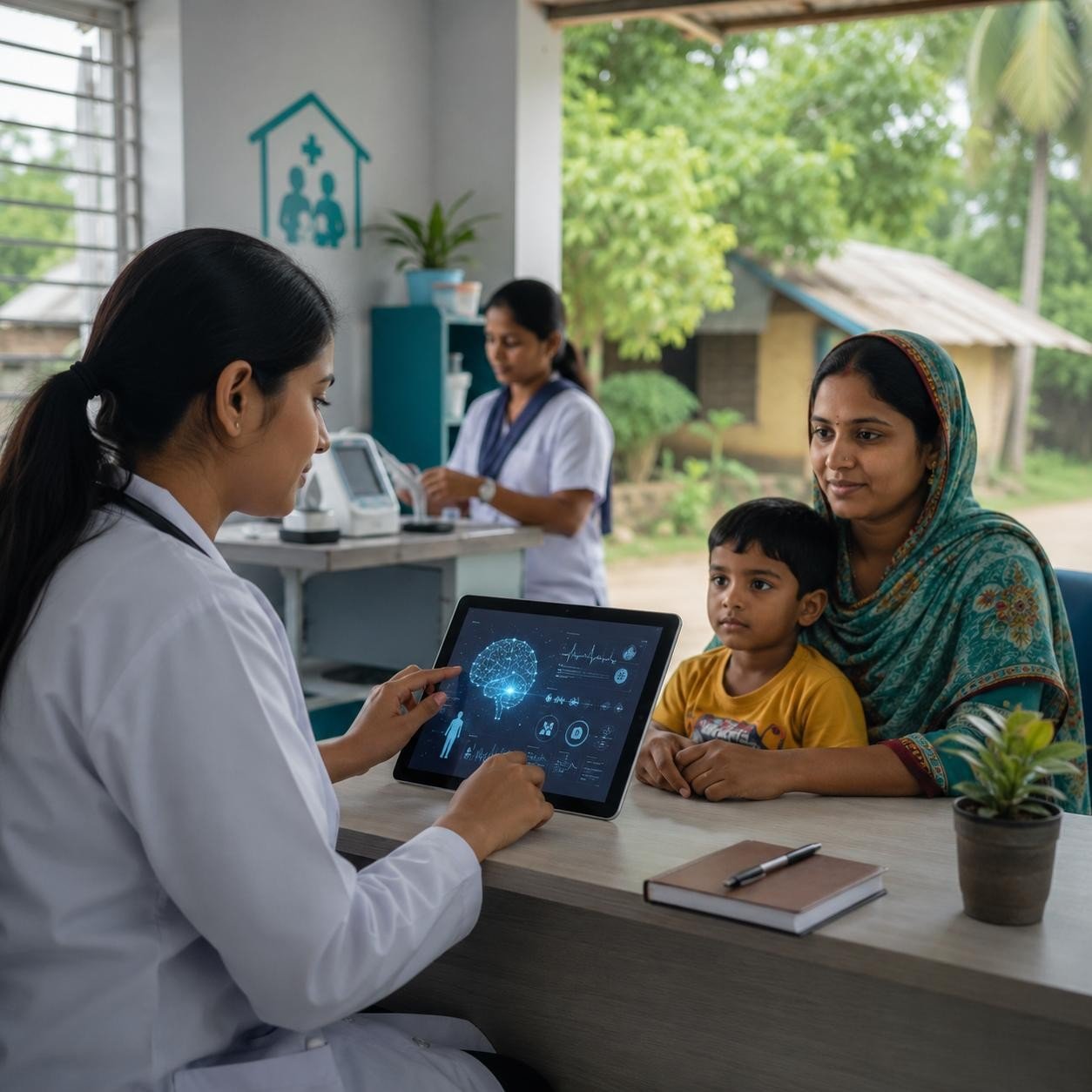

A new research project has begun to study how artificial intelligence can improve primary healthcare in Bangladesh, especially for people who need simple and affordable services close to home. The project will examine whether AI tools can be used in a way that is technically practical, financially reasonable, and suitable for daily health operations. The Health Economics Unit is leading the study, while the International University of Business Agriculture and Technology is serving as the academic partner and Spreeha Foundation is providing funding. This partnership brings together public health knowledge, research skills, community experience, and technology planning. Primary healthcare is often the first point of contact for patients. It includes basic check-ups, health advice, early screening, disease prevention, and referrals to higher-level care when needed. AI may support these services by helping health workers review symptoms, organise patient information, identify possible risks, and decide which cases need faster attention. It could also help clinics study common health problems and plan staff, medicine, and equipment more effectively. However, the research will not assume that every AI tool is useful. It will study costs, technical needs, staff readiness, data quality, patient safety, and the ability of clinics to use the system correctly. This careful approach is important because healthcare decisions affect real people, and technology must support trained professionals rather than replace human judgment. The study will involve experts from healthcare, economics, technology, universities, and public institutions. Their combined knowledge can help create recommendations based on evidence instead of excitement around new technology. Researchers and students will also take part, giving young professionals practical experience in an area that is growing worldwide. The project may explore how AI can work in community clinics, remote consultation services, screening programmes, and digital health records. It may also identify challenges such as weak internet access, limited devices, language needs, privacy risks, and a shortage of trained users. Patient information must be protected, and any AI system should explain its results clearly enough for health workers to check them. If the study finds practical options, AI could help bring earlier support to communities where doctors and specialists are limited. It might reduce waiting time, improve referrals, and help health workers focus on patients who need urgent care. The research could also guide future investment so money is spent on tools that offer real value. By testing benefits and limits together, the initiative can help Bangladesh make responsible choices about digital healthcare. Its strongest contribution may be a clear plan for using AI safely, fairly, and affordably to strengthen primary care for ordinary people. Guidance and pilot programmes can help clinics test tools before wider use, allowing problems to be corrected early and workers to gain confidence.