

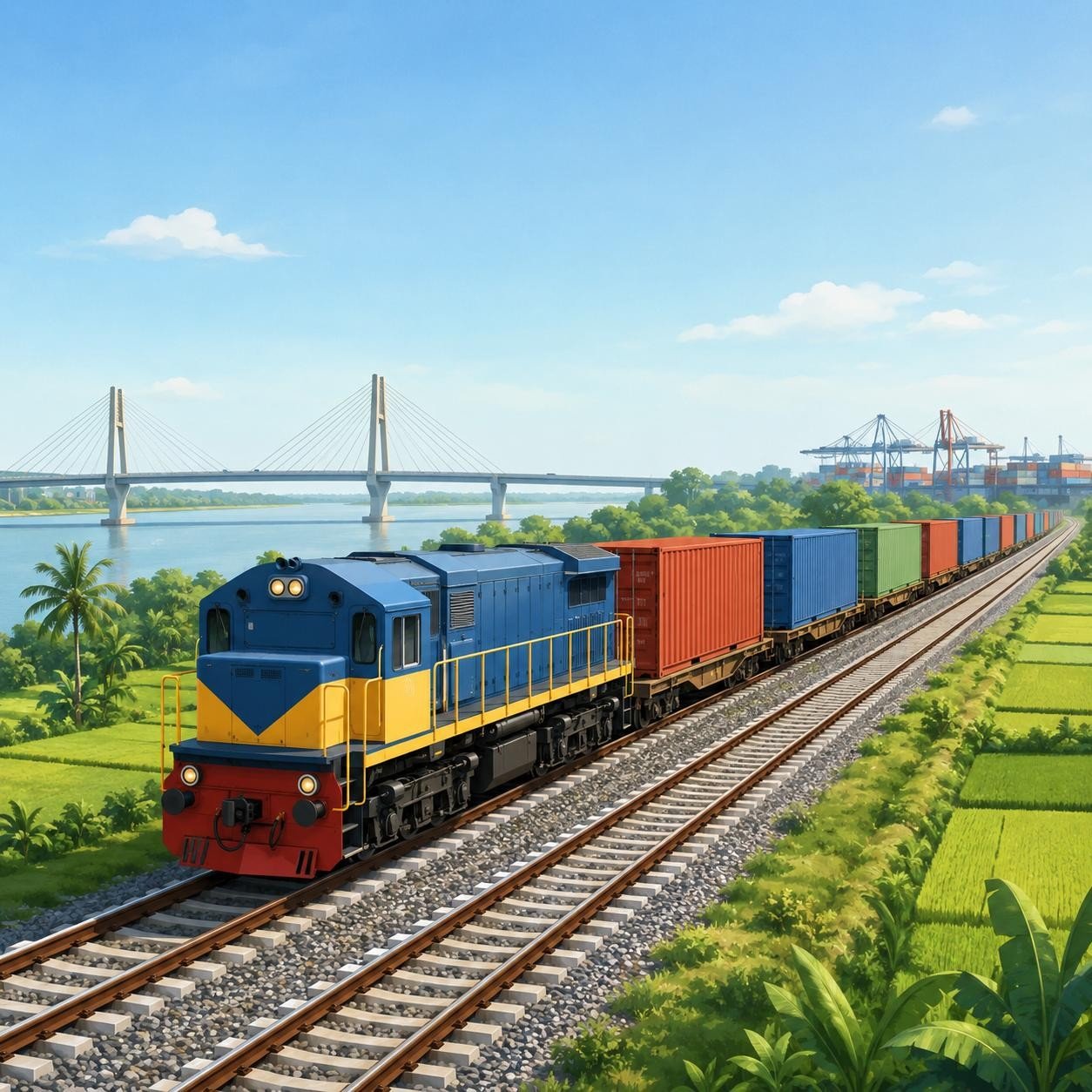

Bangladesh Railway plans to expand its freight capacity so a larger share of the country’s goods can move by train instead of relying mainly on roads and waterways. Rail currently carries only about three to four percent of domestic freight, leaving significant room for growth. Increasing that share could lower transport costs, reduce pressure on highways, and make the movement of heavy goods more efficient. The plan includes short, medium, and long-term steps to strengthen services and increase railway revenue. One key action is to operate more freight trains by making better use of double-track sections on major commercial routes, including the busy Dhaka-Chattogram corridor. Double tracks allow trains to move in both directions with fewer delays, helping passenger and cargo services use the same network more smoothly. The railway also plans to obtain additional freight wagons and locomotives. These are essential because new tracks alone cannot carry more goods without enough engines, containers, and specialised wagons. Modern equipment can improve reliability, reduce breakdowns, and allow longer or more frequent trains. The plan also focuses on inland container depots and logistics hubs, where goods can be transferred between trains, trucks, ports, and warehouses. Well-designed hubs can shorten loading times and make cargo tracking easier. Better rail links to ports and industrial areas would help exporters and importers move products in larger volumes. Garments, agricultural goods, food, cement, fertiliser, fuel, machinery, and containers could all benefit from dependable freight services. Regional and sub-regional railway connections are another part of the strategy. Stronger links with neighbouring markets may support trade and make Bangladesh a more useful transport route within South Asia. Existing large railway projects can also create more value when their freight potential is fully used. To succeed, the expansion will require careful scheduling, safe tracks, modern signals, skilled workers, and fair pricing. Businesses need regular services and clear delivery times before they will shift cargo from trucks to trains. Digital booking and tracking systems could make rail freight easier to use and help customers follow shipments. Freight trains are especially effective for heavy loads travelling long distances. One train can carry the work of many trucks, which may reduce road congestion, fuel use, and damage to highways. Rail transport can also produce lower emissions per tonne of cargo when operations are efficient. The planned expansion offers a practical way to improve national logistics while supporting industry and trade. By combining better tracks, stronger equipment, modern hubs, and reliable service, Bangladesh Railway can become a larger part of the country’s goods movement system and provide businesses with a safer, cleaner, and more affordable transport choice. This shift could also create jobs in operations, maintenance, warehousing, cargo handling, and logistics management nationwide.