

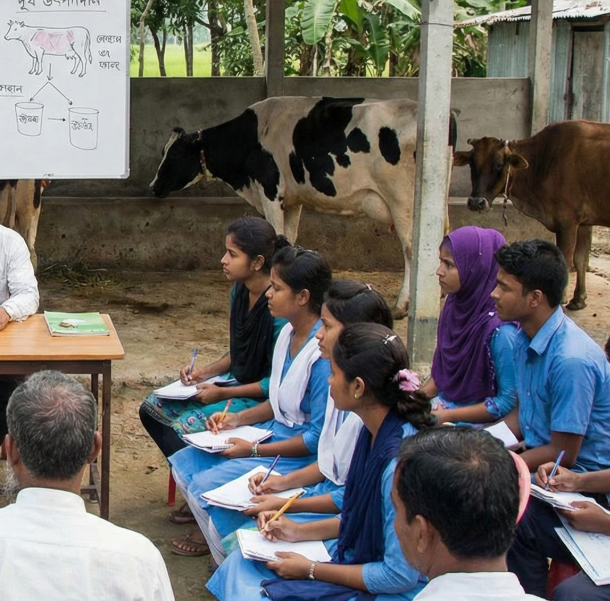

Bangladesh Agricultural University’s dairy farm has become a clear hub of hands-on learning and research, showing how a working farm can teach students and help local people at the same time. The farm sits on seventy acres and now cares for about two hundred and seventy animals, including around seventy dairy cows, one hundred and twenty calves, thirty-one cows in reproductive rest and forty-nine buffaloes, and it raises improved breeds such as Holstein Friesian, Jersey, Shahiwal and Red Chittagong alongside Murrah buffalo. Students and teachers say the farm gives real practice in animal care, milk production and nutrition that cannot be learned only from books, and many postgraduate learners gain direct experience in feeding, breeding, health checks and milk handling. The unit now averages about three hundred and eighty litres of milk a day, and some of that milk feeds calves while the rest is sold to university staff, students and local buyers at a modest price, with the farm also making yogurt, cheese and ghee that buyers praise for taste and quality. Alongside daily work, the farm runs research projects that aim to raise yields, improve animal health and test better feeding plans, and staff describe how small changes in feed balance or housing can lift productivity without heavy costs. To keep animals healthy, regular vaccination and deworming programmes protect against major diseases such as anthrax, foot-and-mouth and lumpy skin disease, and careful feed and hygiene help cut illness and loss. Faculty and farm managers say adding more modern tools and a bigger budget would let students use new tests and machines and reach international standards. Young learners speak about the value of seeing theory put into practice: one student said the farm lets her try techniques she reads about in class, and another noted the chance to work on breed improvement and milk quality projects that could lead to useful research papers. The farm’s mix of production, teaching and study also helps the local economy by training skilled workers who later work in farms, factories and research labs, and by showing village producers simple methods that raise yields and protect livestock. Extension work and demonstration plots help nearby farmers copy low-cost ideas for pest control, timing harvests and choosing good feed. Those practical links mean that the farm is not only a place for study but a live example of sustainable livestock development that benefits students and the wider community. Staff stress that steady support, clearer funding and more equipment will let the dairy unit expand its role, and they hope stronger backing will turn pilot studies into larger projects that improve milk supply, create jobs and build knowledge for the whole country and boost rural livelihoods too.