

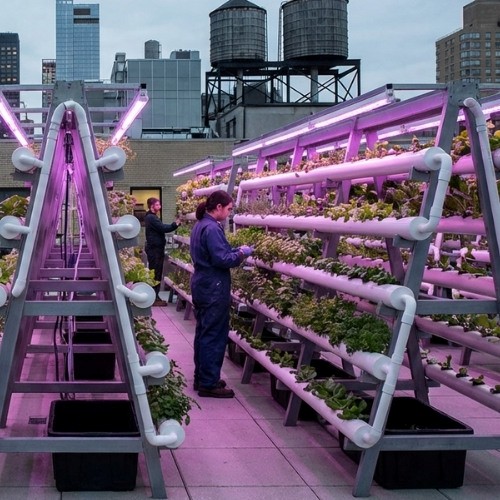

Bangladesh is losing farmland fast, and experts at a recent seminar say vertical farming could help save space and grow steady food, so pilots and investment are needed now. The seminar and data show different measures of loss: some speakers put annual land conversion at two thousand five hundred to three thousand hectares, and United Nations records show arable land fell from about ten million hectares in 1980 to roughly seven million hectares by 2020. This steady shrinkage, added to reports that the country loses wider areas each year, means planners worry about long term food security. Vertical farming lets people grow crops in stacked layers inside buildings, containers or on roofs, and it uses systems like hydroponics, LED lights and automatic watering so plants can grow all year without wide open fields. That matters because machines in vertical farms use much less water than old methods, often saving between seventy and ninety five percent, and the system avoids many weather and pest problems. Vertical farms already work in places such as Germany, the Netherlands, Japan and the United Kingdom, and the United States has a big industry that shows how funding and scale can make the model practical. Japan alone has more than two hundred operational vertical farms, and the example shows how technology, training and steady buyers help the idea succeed. For Bangladesh the gains could be real: cities like Dhaka could turn roofs, empty warehouses and plots into food hubs, cutting the need to import some vegetables and helping after shocks like the 2024 floods that damaged crops. The main challenge is cost, because lights, climate control and automation need money up front. To succeed, the country will need a mix of public grants, private investment, pilot projects and simple loan schemes that help small teams try new systems without high risk. Training is also vital: one study found many older farmers know little about new tools and artificial intelligence, so short courses and hands on help are needed so workers can run machines, track nutrients and use data for better yields. Vertical farming should not replace all traditional farms. It works best alongside better seeds, smarter irrigation, organic soil care and rules that slow down the loss of good fields to unchecked building. Government bodies, universities, buyers and development partners can coordinate to test models, share results and speed useful change. If leaders back pilots, make funding fair and teach farmers new skills, vertical farming can raise local food supply, save water, make city food systems more reliable and give new jobs. Acting now will help Bangladesh use less land and more technology to keep food growing as the country grows and the climate changes.