

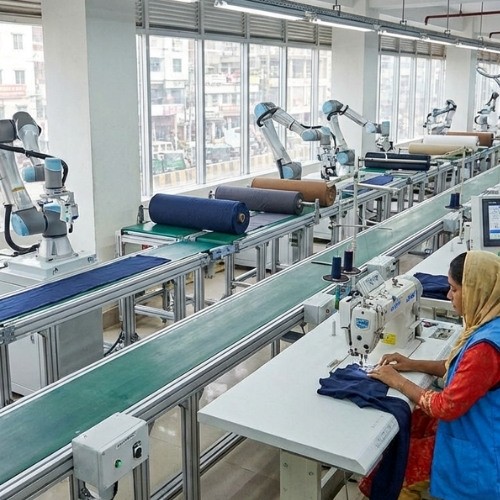

A new study shows Bangladesh’s ready-made garment industry raised productivity by about 4.19 percent a year between 2014 and 2023 after factories started using more machines, digital tools and better planning, and this shift is helping many factories make clothing faster and with fewer mistakes. The gains are biggest where automation is strongest: cutting, knitting and wet processing led the change, with cutting growing about 11.13 percent annually, knitting about 9.85 percent and wet processing about 6.11 percent, while sewing, which still depends most on people, rose more slowly at around 3.57 percent a year. The report also looked at products and found jackets, knit lingerie and sweaters posted some of the largest gains, followed by home textiles and T-shirts, while woven shirts, trousers and denim saw smaller improvements because they use fewer automated steps. Recent technologies and digital innovations are transforming operations on the production floor: computer-aided design combined with CNC cutting enables a small number of operators to produce significantly larger quantities with enhanced accuracy, contemporary knitting equipment utilizes microprocessors along with CAD/CAM design, semi-automatic sewing heads accelerate certain tasks, and novel finishing and dyeing technologies like laser or ozone systems and automated dye dosing contribute to conserving both time and chemicals. Factories are also using digital quality control tools to find problems early and fix them before more garments are made, which lowers waste and keeps buyers happy. These changes matter because the garment sector earns a large share of the nation’s export money and supports millions of jobs, so even modest productivity gains can add real value to the economy. At the same time, experts warn that rapid automation can push some jobs out if governments, factory owners and buyers do not plan ahead, so the study calls for policies that help workers learn new skills, move into higher value tasks and take part in safe, better paid roles. Practical help can include short technical courses, on-the-job upskilling, phased machine rollouts and finance or incentives for small factories to invest without risking workers’ incomes. Buyers and brands can also play a role by offering longer orders, fair pricing and support for cleaner, faster production. The overall message is hopeful: with steady tech adoption, clear training plans and shared effort from factories, buyers and policy makers, Bangladesh can keep building faster, cleaner and more competitive factories that protect jobs and open new chances for workers and businesses.